Wednesday, February 26, 2014

Curios to Culture (The Heard Museum Phoenix and what it can tell us about the ever changing state of Native American art)

Jonathan Sanchez
From Curios to Culture
(The Heard Museum, Phoenix and what it can tell us about the ever changing state of Native American art.)
(The following is a research paper created for the UF Art Education program it was my final indie project for ARE 6048)
The process of contact that is to say Europeans, Asians and Africans learning of the multitude of languages, traditions, and art of the Americas is still on going. Manifest Destiny and its mania to create a country from sea to shining sea still reverberates with the folks in between those two coasts. Like all subcultures there is a push and pull from a dominant culture some ground is lost, some gained. The languages and traditions that are lost become fuel for the speculations of archaeologist, those that study dead cultures. But like so many sherds of pottery you can not know what was once cooked in the scattered pot, who sat around it, what was said or sung around the pot. Prevention is better than cure and preservation always preferred to recreation which brings us to the importance of the Heard Museum Phoenix.

Using the Heard Museum in Phoenix Arizona as a point of discussion I will present the evolution of Native arts and changing views of American Indian art while focusing specifically on the approach and methodology the Heard employs with regard to art education. The Heard provides an important repository of historic and contemporary items but also presents a unique art education perspective. Through the Heard’s continued efforts we can observe a model of multicultural and pluralistic art education in action.
The main achievements and contributions of the Heard to art education, are community outreach, preservation, creating a new standard and climate of multicultural education. They have reached these new levels and contributed to an overall discussion through direct tribal, peer, academic and community input. Hosting conferences, workshops, and displays intended to advance global understanding of the issues facing Native Americans as expressed through their art. The Heard took a historic stance but has not remained fixed it continues to contribute and shape advise and of course educate.
A Brief History
"The mission of the Heard Museum is to educate people about the arts, heritage and life ways of the Indigenous peoples of the Americas, with an emphasis on American Indian tribes of the Southwest" (Heard Museum website).
It was a small effort that grew like the Phoenix area itself. Now a major densely populated city, so too the museum has grown in size, mission, and prestige. It was once a novel idea to gather a few Indian curios here and there with little thought to the ancient and rich cultures that spawned the works, the Heard was to treat these items differently. Dwight and Maie Bartlett Heard founded a small museum in 1929 in a little known area somewhere out west. The collections and facilities have grown over the many years that followed, shifting from a home for dusty things on a shelf to living breathing community center.
Maie Heard continued the museum after her husband’s death in late 1929, acting as custodian, lecturer, director, curator and a guide for more than 20 years. The Heard Museum underwent significant growth upon Maie Heard's death in 1951.
In 1956, the Heard Museum Auxiliary was established to assist with educational programs. Today, the Heard Museum Guild numbers nearly 700.
In 1958, volunteers launched two aggressive fundraising projects, adding a museum shop and a fair which today draws nearly 20,000 people from all over the world.
The Jacobson Gallery of Indian Art doubled the original building in the late 60's.
Today
The Dorrance Education Center includes three classrooms used for school tour orientations, specialized tours or workshops. Nearly 400 schools in 20 states use the Heard as a source of curriculum material about American Indian heritage, and 10,000 Arizona school children visit annually.
One of the most significant additions to the museum was the small Berlin gallery. It represents the final step in a process from Curios to Culture. Native contemporary art is presented not as trinkets or tourist items but as the intellectual, spiritual, and cultural work of relevant modern artists. Like many that enjoy the benefits of this experiment in self rule we call America, Native Americans exist within and without American culture. Arizona is fortunate to be home to 22 tribal nations, each with its own distinct language and cultural traditions.
The museum shops and market provide an outlet for Native crafts producers and allow artisans of all kinds to sell their items.
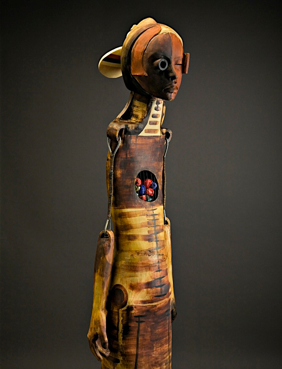
to fill that hole.pngRose Bean Simpson


Art Education at the Heard
It is in many ways impossible to remove any art from its culture and have it retain its meaning. The Heard does an amazing balancing act, rhetorically, and physically to maintain the concepts behind the art and the deeper cultural ties, and still present their collections as works of art. Often there is a distinction made. Items are referred to as works of art but also as, "cultural items". When I spoke with a few of the docent about the distinction it was noted that some items were tourist trap pieces that though now old never held ceremonial or religious medicine. The works are presented for their aesthetic and historic merits. There is often a fine line between such distinctions but all comments and inferences about the works must begin from a perspective of respect and cultural sensitivity.
Excerpt from the Heard website.
"Nearly 2,000 treasures including jewelry, cultural items, pottery, baskets, textiles, beadwork and more."
The education department has been a part of the museum from the beginning with tours and lectures and in the 1950's expanding to wider programing. Today they have three kid friendly facilities, two jam packed with hands on activities for wide range of ages. Kids and families can interact with video, a variety of games and are encouraged to draw and create throughout the education areas. There are items for download through the website, there are others to take home to continue the process outside of the museum, and plenty to do an interact with while at the museum. There is a real mix of aesthetic activity and acknowledgment of the culture and stories behind the visual concepts. Clearly the Heard is a modern museum shaped by Native input and state of the art museum thinking, the result of long evolutionary process.
On the Trail of Leaps and Bounds
I visited the Phoenix Art Museum and Heard Museum libraries, education departments, and archives. The impetus for the Phoenix Art Museum visit was a photocopy of a program for a workshop that seems to have happened in 1991. It was a joint project between the Heard and the PAM. The PAM portion was centered around an exhibit of Western Art entitled Myths of the West. Cowboys both real and of the Hollywood varietal were contrasted. Romantic paintings of Bierstadt and others were compared to stark documentary photos and all of this accompanied with lectures on all things, "Out West" (1990, Rizzoli). They would also address the marginalized Native presence in genre paintings and the early studio or staged works of Indians that contributed to a mythic image of Native Americans (1991, Gray).
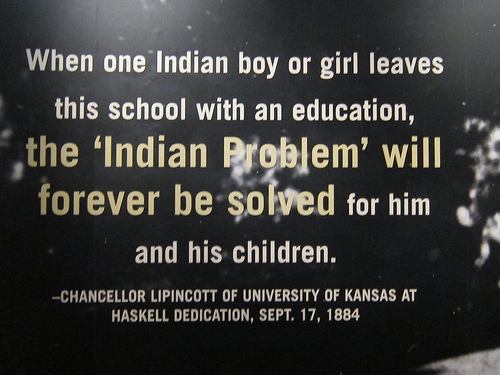
It has been a long process of allowing that Native Americans might have something to contribute other than posing for staged photos and paintings to satisfy white European fantasies about “Indians.” Natives held in captivity and allowed to draw or paint were at first mere curiosities (Heard Guide). Others in away schools attempting to solve the “indian problem through education” were forced to adapt European techniques of rendering and were largely deemed incapable of deeper intellectual processes (Stankiewicz, 48-49). away school sign.jpgAway school exhibit the Heard
Contemporary artists, writers, performers, pushed back during the “Red Power Movement,” and opened some minds to Native perspectives.  
The titles of the lectures perked my interest they seem to be exactly the sort stuff I was trying to unearth. Here are some excerpts.
Teaching Through Diversity (Leaps and Bounds) May 1st 1992 Phoenix Art Museum and Heard Museum
Program outline
"How do we approach the objects as art or artifact?
"Whose voice interprets the object?"
"How much do you need to know to interpret the object (or appreciate the object)?"
"Can a true understanding of an object from one culture be understood by another?"
"How do we teach sensitivity to and from other cultures?"
"What teaching methods do we use?"
"Are there any role models which we can follow?"
Sadly none of the papers made it into the archives of either museum, or anything more than that original photocopy survived the workshop. None the less these are all great questions to consider as art educators and were later transposed into the Museums Resource Guide.
I spoke with the PAM registrar and archivist and found that early Native works were out of the scope of the PAM's collecting. Native items of any kind were passed onto the Heard. I found this curious sure they have the corner on the market, the Heard works in conjunction with numerous tribes and tribal officials and the PAM has curators trained in other things ill-equipped to address Native art of a historic nature. But Scholder and others they were fair game, they were producing relevant contemporary art with Euro, Pop, and American references. They had it seems crossed an invisible line and were considered, "real art" worthy of a "real art collections or museums”.
PAM was ready to accept modern Native artists of a certain notoriety and caliber into their museum collection. I sat pondering this for some time and it still makes my head spin a bit, is this progress?  
Back at the Heard
Like all museums the Heard is dependent on the generosity of the general public. In the retirement Mecca of Arizona some of that generosity comes in the form of volunteers. A team of docents, guides, and general workers, allow the museum to function. I sat with a few of these docents to glean what I could about their training process, their attitudes toward the objects, and what they felt the museums goals were. All agreed that education was primary to the museum and that it was key to the survival of Native cultural ways. A re-education process was needed to help people re-learn or abandoned the often racist views that the general public hold about Native Americans.
Native images are all over the place in America from carved wooden figures, western movies, and sports mascots, but like other racial stereotypes of the past they tell us nothing of the actual people they characterize. The real challenge of the Heard is to use art and art education to break down these stereotypes and help the museum public, and the larger community walk away with a new understanding and respect.
Walking through the museum people watching and listening to the general public, I found younger people more open minded in this regard and the senior groups visiting, mouthing the old cliches, and even racial epitaphs. Ironically many of the museum workers are Native and must have to daily endure these slurs and cliches. One contrasting view was expressed by a young teenage girl that while viewing items from Pacific northwestern tribes stated, "Now I like these indians, I hate the ones in the Southwest." That is to say the Indians she encounters on a daily basis she claimed to hate versus the ones far away that she had no contact with.
The docents I spoke with seemed guarded and very careful of what they said and how they said it. They undergo an extensive training beginning with cultural sensitivity to combat the years of John Wayne films and sports mascots. Two years later some one is fully certified as a docent and must continue to be quizzed, observed, and tested routinely. They are presented a script of highlights or talking points but are encouraged to make the tours and talks their own over time. Respect, and approaching the art as part of a universal urge to create and make art continued return to the discussion. I left with the sense that the staff felt they were held up in a stronghold of ideas expressed through art. A stronghold besieged by overwhelming misinformation, racism, stereotypes, and “other” making forces. Art a kind of hostage in a larger cultural struggle can often be lost beneath the politics.
At the Heard looking for the origins of modern native art, a change in attitude or rhetoric, some clue as to when the shift from Curios to Culture actually occurred, I ran into some interesting historic documents.
AAM ICOM NAGPRA and the Politics of Culture
The 1970's saw sweeping legislation with far reaching and snowballing effects for the museum world. By laws were revised, codes modified, new ones written and museums from the top down are still reverberating from the shift. President Carter in 1978 signed into action Senate Joint Resolution 102 (Law No. 95-341, Heard Archives). The American Indian Religious Freedom Act was intended to reaffirm the rights tribes should have had under the US Constitution (Amendment 1). As these rights are guaranteed to all citizens in some cases it was defining Native people as such (versus enemy combatants, prisoners of war and the other quasi statuses some tribes held). For example, many southwestern American Indians returned from the second world war and found they had no right to vote (Navajo Code Talkers display, Heard Museum). American Indians were given back land during this time, and museums found themselves in conflict being mandated to return portions of their collections.
A Phoenix Gazette article in 1986 quotes then Heard director, Peter Walsh as saying, "It's been years since the Heard had any bones," that is to say human remains in its collection. The assumption is these items were long ago returned, handed over to tribal authorities or religious leaders. The inference is of course that they once had these things. Further, the question as to how many museums in 1987 when the article was published still had these items. Of the three southwestern museums that I have worked for as late as 1999 I can tell you that human remains were still in all three collections. At one museum I was blessed (smudged) by a Lakota medicine woman smoked the peace pipe, and given special instructions on how to treat and relocate the small collection of folks they were in possession of. A ceremony of cleansing, council advisement, tribal input and compliance from the staff, all to keep a few touchy items in the museums collection, what were other museums going through I wondered? We were willing to do these things out of respect though the few large funerary urns were once merely pretty pots.
The International Council on Museums convened to update and modify their stance with regards to the ethical treatment of cultural items. Similarly the American Association of Museums (AAM) decided to also review its 1922 charter and set of codes beginning in the 1970's. One of the key conferences was in fact held at the Heard in 1980 in conjunction with the National of American Indian Museums Association.
AAM Ethics Mandate was issued in 1987 stating, "Museums in the broadest sense, are institutions which hold their possessions in trust for all mankind and for the future of the human race." The resulting mandates and entire 30 page directive for the handling and possible return of sacred items. Here again is the rub a pleasing pot in a display case that is treated as a work of art might need to come out of the display case, might need to be treated differently or might need to be returned to a tribe altogether. Worldwide indigenous people watched these events annual meetings ensued and tribal people of all kinds began to assert their rights to their material culture in some cases their art.
Finally the Native American Graves Protection and Repatriation Act (NAGPRA) was enacted in 1990, adding further and greater legal power to tribal organizations and officials.
The Native American Fine Arts Movement
The Heard has comprised one of its most valuable and available items the Resource Guide. Through the museums education section on its website, anyone anywhere can obtain a concise history of Native American art to present. Outlining the major movements and artists from the 1800’s and early interest in Native art to contemporary giants like Fritz Scholder and Rose Bean Simpson.
Through the hatred, relocation, broken treaties, rape, murder, theft, disease, starvation and outright genocide that has been the Columbian exchange, Native artists have still found the strength to create and add their unique voices to art history. To blame the shift from Curios to Culture purely on legislation is to deny that Native artist themselves used their art to protest, shape and change minds and perhaps influence legislation.
.scholder.jpgFritz Scholder
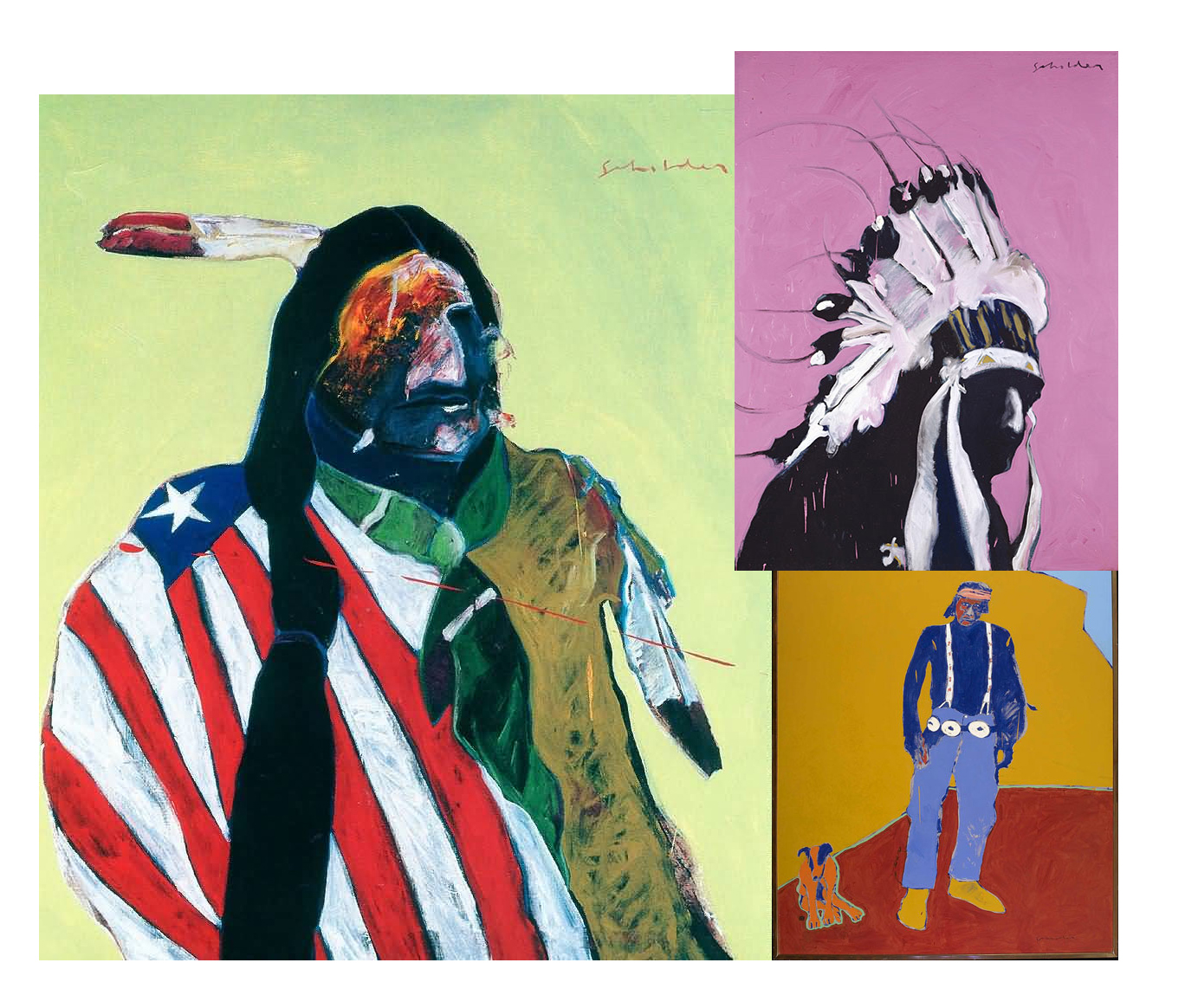
There are too many fantastic contemporary Native artists to mention but the example of Fritz Scholder is worth mentioning. His works grace the walls of numerous fine art museums he has been recognized and has ascended to a lofty place in the art world. His work as an art educator in Santa Fe helped shape a generation of young artists and his social and political critiques rocked the foundations of the art world.
Central to his art was the notion of being Native in the modern world, questioning assumptions of what is Indian, what it means to be Indian? He drew from this unique perspective to challenge existing notions about Native Americans and bring about and acceptance on different terms. The bravery of Scholder and countless others drove the shift from Curios to Culture it was their activism and criticism that broke down the barriers of the art world. The Heard celebrates this spirit and lives out these themes.
The Heard is an experiment in Native art education presented and created with Native artists, tribal officials and scholars jointly. That it is has managed to endure and flourish is remarkable and its preservation efforts have allowed for future generations to experience a wide range of cultural items. Most importantly is the community and culture of respect that the museum represents putting its educational mission into to action.


References further reading;
Masterpieces of Western American Art (1991) Gray, J. M&M Books.
Myth of the West, (1990) Rizzoli, NY.
Institute of American Indian Arts.
Stankiewicz, M.A. (2001) Roots of Art Education, Davis Publication.
Blandy, D (2008) Studies in Art Education, Vol. 50 #1 (Phoenix Art Museum archive)
Discussions with the PAM archivist and registrar
No Bones (1997) Phoenix Gazette
Deloria V. (2003)God is Red. Fulcrum Publishing
Shared Visions: Twentieth Century Native American Painters and Sculptors in the United States (1993). The New Press, W.W. Norton & Company, New York.
NAGPRA website http://www.cr.nps.gov/nagpra/ Heard Museum displays or archive
Joint Resolution 102 public (Law No. 95-341, Heard Archives)
Navajo Code Talkers (display)
Home (display)
Interviews with staff and docents.
Overheard conversations while visiting the Heard.
Notes from the Heard Conference of Native American Indian Museums Association 1980 (archive)
American Association of Museums, notes from the 1987 Conference, section entitled, “Code of Ethics for Museums (archive)
Notes from the ICOM Conference 1986 on ethics. (archive)
AAM literature on the history of the AAM (archive)
Post script
The Native American Graves Protection and Repatriation Act (NAGPRA, Pub. L. 101-601, 25 U.S.C. 3001 et seq., 104 Stat. 3048)  is a United States federal law enacted on 16 November 1990. The Act requires federal agencies and institutions that receive federal funding (such as national parks) to return Native American "cultural items" to lineal descendants and culturally affiliated Indian tribes and Native Hawaiian organizations. Cultural items according to the NAGPRA website are defined as, “human remains, funerary objects, sacred objects, and objects of cultural patrimony.” A program of federal grants assists in the repatriation process and the Secretary of the Interior may assess civil penalties on institutions that fail to comply.
NAGPRA also establishes procedures for the inadvertent discovery or planned excavation of Native American cultural items on federal or tribal lands. While these provisions do not apply to discoveries or excavations on private or state lands, the collection provisions of the Act may apply to Native American cultural items if they come under the control of an institution that receives federal funding.
Lastly, NAGPRA makes it a criminal offense to traffic in Native American human remains without right of possession or in Native American cultural items obtained in violation of the Act. Penalties for a first offense may result in 12 months imprisonment and a $100,000 fine.
PSS
Ironically I ran into one of our own Doug Blandy in the PAM archives, well a paper from him. It was part of a larger workshop on Pluralism creating a culture of pluralism through art education. The situation of the lost papers which seem to answer my every research question and meet my goals was addressed by Blandy. "Art educators' predilection is to focus on the problems and challenges of today without fully considering their antecedents or the larger history of the field. Our taste is now to act on this as a basis for deepening our historical knowledge and more fully understanding the genesis and evolution of the field" (Foreword to the symposium "Celebrating Pluralism"). Here was suddenly the goal of our current class, the goal of the paper and research at hand, and the goal of the missing workshop I was on the trail of, but they failed they did not pass this info on intact to future generations as Blandy suggested they should have.


All of the archivist involved looked embarrassed, flabbergasted, none the less the very thing Blandy warns us of had managed to happen, the information was lost.

Thursday, January 30, 2014

Fourteen Years That Changed the World (The Bauhaus Experiment)

The Bauhaus
ARE 6048 Jonathan Sanchez
The Bauhaus Fourteen Years That Changed the World
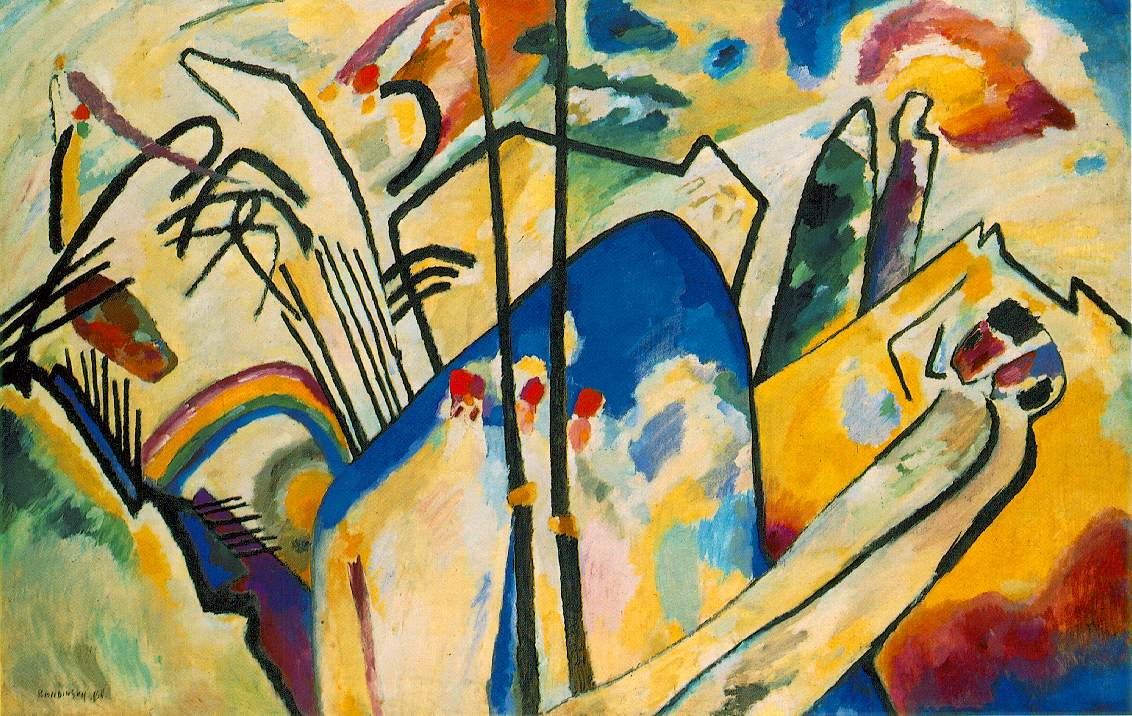
The Bauhaus represents a fascinating intersection between an intense search for a new pure design and form of art education and often free experiential learning. Johannes Itten and Paul Klee two Swiss artists and art theoreticians both wrote and approached art as a lifelong spiritual journey. Though Itten imposed his own brand of geometry to present an underlying order in art and color theory, Paul Klee sought to tap into a kind of Jungian intuitive or childlike approach. Somewhere between the two was Wassily Kandinsky both free and expressive and at times rigid an orderly in his works, he seems to embody the paradox that was the early Bauhaus.

(This writing was created for a grad art education program through University of Florida the writing is part research paper part answers to discussion questions poised by the instructor)


1. What is the significance of your chosen person or movement to the field of art education (i.e., What’s worth remembering about this person or trend)?
Many university art programs mirror the approach of the school. An emphasis on handwork mixed with intellectual efforts was key to the 14 year long Bauhaus experiment and is often present in modern art schools today. The early program relied on a mix of Eastern Mysticism, experiential learning, and nothing short of a re-thinking of Western Culture from the bottom up. Like the other movements of the time (De Stijl and the International School) Gropius and his followers were reacting to the vast devastation and demoralizing loss of world war one. Seeking to find new symbols, forms of expression, and to reconnect civilization and industry to art, in an effort to save both.
Johannes Itten and the other instructors at the short lived schools would conceive of color charts and wheels, which have stayed with art training into the digital age and still grace Adobe and other programs.
The free association and spiritual searching through abstraction that Klee and Kandinsky pioneered is another important tool that artists can use stemming from the school. Klee in particular placed an emphasis on the art of children suggesting that children know art and traditional schooling and society stamp art out of them. Kandinsky as well collected the art of children and sought to reconnect with natural and spontaneous creations of children.  
There was present a multi-cultural emphasis that was ahead of its time through literature, art even the food and dance of other cultures, Bauhaus students and faculty were thinking globally long before such a term was coined. There was also an underlying lack of vernacular in the abstract art, design, and architecture, which is part of why Hitler hated the school so much, it didn’t represent his view of Germanic culture and his imagined neo-classical so called Third Reich. Part of the romance with the school is this open minded, exploratory nature that many art instructors still seek to emulate almost a hundred years later.   


2. What important books or articles did your person write? Who is the key person(s) associated with your movement?
There are several notables associated with the Bauhaus experiment. Walter Gropius architect, writer, artist, and founder of the movement seems to have been a charismatic and ambitious leader. He later taught in the US at Yale. Two of the most important painters that have ever painted were instructors Paul Klee and Wassily Kandinsky. A lesser known painter and color theorist was also an instructor, Johannes Itten is worth mentioning. The last director (that tried to keep the school together under National Socialist occupation) would later become one of the biggest names in architecture Ludwig Mies van der Rohe and taught in the US as well.  
The Art of Color from Johannes Itten, is perhaps the most celebrated written work of any Bauhaus artist or instructor. It has been printed and reprinted for several generations and is the seminal work on color theory.
3. What ‘big ideas’ did your person or movement contribute to the field of art education? How did this person’s ideas or movement translate into classroom practice?
The work of the Bauhaus instructors is written large into art history, so they are present in many ways. Most students have copied or created a color wheel nearly identical to that of Itten’s. The ideas of mixing techniques, drawing from diverse sources, collaboration as a kind of workshop or team are all present in many classrooms today and can be traced to Bauhaus experiments in teaching. That there is an interconnectedness to all types of art be it textiles, dance, or architecture, is a contribution of the Bauhaus that still exists on some campuses.


4. What else was happening at the time of this person’s contributions (i.e., in America? in general
education? in the world of Art? in the field of art education)?
Early in the school’s founding the remnants of the Gilded Age an emphasis on a bogus neo-classical mindset were still around. As the Jazz Age gave way to the Great Depression, art transformed in America from lively and hopeful to socialist and message driven. In the thirties and forties deco and streamline looks (based on Bauhaus designs) took hold worldwide. New technologies of faster ships and planes and the radio demanded a new aesthetic.
Denman Waldo Ross an art educator in America, echoed the calls of the Bauhaus to think of art holistically. That is to think of design, dance, and drawing as seeking the same goal (Stankiewicz, 94). Formalist theories the likes of which Itten championed, would come into vogue in the 40’s and 50’s in America. Arthur M. Dow in his writings seems to have expressed some of the Bauhaus ideas, of seeking to create art without regional vernacular, and creativity being an essential human trait not bound to anyone culture or race of people (Stankiewicz,90).
The efforts of Ross, Dow, and Ernest Fenollosa share a commonality and are nearly contemporaneous to the De Stijl and Bauhaus in their search for “pure design.” The rhetoric of these three shares some of the idealistic notions that art can change the world re-build the world tone of Walter Gropius (though there is no evidence of an actual connection and the first Bauhaus in Weimar dates to the early 20’s the time of Dow’s demise).


Paul KleeJohannes Itten


Wassily Kandinsky


References
Jordy, W (2005) "Symbolic Essence" and Other Writings on Modern Architecture and American, Yale University Press.
Wick, W. Grawe, G. Rainer K. Wick, (2000) Teaching at the Bauhaus, Distributed Art Pub Incorporated.
Weber, N. (2009) The Bauhaus Group, Knopf/Random House.
Duechting, H. (2007) Kandinsky, Taschen.
Stankiewicz, M. (2001) Roots of Art Education Practice, Davis Publication.
Itten, J. (1997) The Art of Color: The Subjective Experience and Objective Rationale of Color, John Wiley & Sons.


Websources
www.kunstmuseumbern.ch

Sunday, January 19, 2014

My Life in Art

My Life in Art
Jonathan Sanchez
Created for ARE 6049


Looking back now, I would say the pivotal moment for me was receiving a sketch pad at about the age of seven. I still have it every page was filled over a summer living with my grandparents. Residing in a little retirement community near Ocala Florida (not the end of the world but you can see it from there) I heard daily about the Great Depression and the Second World War as if they happened a few weeks ago. The pace of life in a retirement community (at about the speed of smell) left a young boy chomping at the bit. My folks going through a divorce and my brother and I dumped on my grandparents doorstep, I discovered through this simple sketch pad I could make the world go away or make entirely new ones. If I would not have had that combustible mixture of mind numbing boredom and confusing gut churning pain, I would have become someone else for certain, but more than that I would never have had found solace and a deep profound connection to art.
The power of art to transform, heal, and transport can only be understood by those that have felt those effects, and of course can’t be overstated. In my own life art has been a constant source of entertainment yes, but dare I say a spiritual or at least meditative and therapeutic quelle.
Earliest Art Exposure
My earliest memories of art in school were marred by needing glasses which my father refused to purchase. A border line dyslexia, acute inability to see straight lines, constituted a learning disability that went un-diagnosed until college. Falling further behind in classes and truly being unable to see well or oft mixing 51 with 15 crippled me in school and again I sought solace in art. Frustration and as one elementary teacher described me, “you have absolutely no sense of color,” led me to believe I would never be able to master art of any kind. Perhaps it was this criticism that fired me, but more it was I think that in my sketch pad, on my time there were no wrong answers or bad art, if it was in my pad it belong there. Thinking back to the humiliation and negative comments I received as a child it is amazing I did not grow up to hate art or want nothing to do with it.
In junior high things began to change my best friend and I would spend a Friday night drawing, copying comic books, things from Star Wars books, geeky sci-fi stuff of any kind, we both challenged each other critique each other and grew as artists. Soon I might be inspired by comic book but I began to create my own stories and characters, my best friend never did and is a commercial artist today.
An aunt I hardly knew gave me a paint by numbers kit of a horse and barn. Something I have never forgotten and think is maybe the second most important moment in my art journey. I could not see remember, the tiny little numbers and shapes seemed to vibrate right off the cardboard canvas making me uneasy. I flipped the thing over and painted a castle, a field billowing clouds, my own fantasy creation. I look back at this as a tiny but irreversible act of rebellion.
Surprisingly my stepmother also loved to draw and paint and supported my efforts. One Christmas I received a tackle box for paints and brushes (which I still use), a cliche little wooden palette and easel. Moving on to painting I again felt that strange sense of being lost in art of forgetting everything being entranced by a painting. The new relationship provided many positive things but also a Southern extreme Fundamentalist Baptist oppression. I learned about censorship and intolerance during those teenage years.
Music was paired with painting but carefully my brother and I hid our records and knew we could not bring certain records home for fear of being caught with them. I had a tiny walkman style radio (which I also had to keep secret for fear of confiscation or worse being made to listen to religious music) it became my sanctuary in a crowded little house in central Florida. Through the re-marriage I was suddenly one of six kids. My poor grades and slow reading ability led to increased depression over school. The divorce left me shattered as a little boy something I learned of only as an adult. The whole while I won prizes for art at the Florida State Fair, sold pieces to friends, and landed works in school literature magazines. So began this duality that so many of us know of being a failure in one world and a rock star in another.
Things got worse at home and I spent some time as a runaway. During that time I could spend hours drawing if I wanted to painting when I could afford it. People wanted my artwork to hang it up, and display it, it seemed too easy in a way though I was putting in enormous amounts of time.
Formal Training and Studies
Reconciling things at home I somehow made it to a community art college in Tampa Florida. I took general classes not sure I would keep it up or could afford it. Nearly quitting to take some dead end job get an apartment who knows what, I took a drawing course as an elective. After the first critique I was pulled aside by Steve Holms my professor at the time. He sat with me I figured I had done something wrong was in trouble for something. He asked to see the other drawings in my pad from the class. Looking them over he asked, “Do you want to study art?” “Do you have enough money for school?” I was taken aback I wanted to study music (tried actually but again I can’t read quickly and memorized music pieces by ear this worked for while until my first theory test) and no I didn’t have any money. It didn’t occur to me at the time to spend loan money on a degree that might actually lead to a job, I hadn’t really expected to make it through more than a few semesters. I was given a full ride at the school money for any and all art classes that I wanted to take and a little for supplies (too little it turned out).
I took every class that I could and even a few that were created for me. The final project was a series of bronze pours with another mentor and hero of mine Jerry Meatyard (yes brother of Ralph Eugene). Jerry and Steve possessed an energy and reverence for art and art history that has stayed with me decades later.
The Vagabond Days
After a brief attempt at the University of South Florida, I traveled a bit in England, Italy, Spain, Morocco, Portugal, Puerto Rico, and France and moved to Colorado. I was pulled into the working world and grew to love all things culinary, learning to be a cook of serious skill and knowledge. At every turn I was called, “Professor Jonathan and Doctor so and so,” my time in college worlds away from the ex-con, wife beater, alcoholic and drug abusive, world of hotels and restaurants. Everyone from the general manager on down seemed to say, “you don’t belong here.” Everyone seemed to think I should be teaching, that I was a natural professor.
A Couple of Degrees
I continued to paint exhibit art anywhere I could, and after a show at a winery in Colorado returned to college. The University of Colorado had a leper colony of ramshackle buildings beyond the farthest reaches of the university, on the other side of a coyote filled butte, dedicated to studio art. The late Jerry Riggs ran the campus gallery and the late Louis Ciccotello ran the fine art program. There were amazing minds in the art history department and dedicated Chicago University of Art studio instructors. I thrived in the penniless environment earning a BS in Fine Art Studies. Exhibiting in Denver and eventually Santa Fe I continued to sell and show works.
While completing my last two semesters I found a work study job at the Colorado Springs city museum beginning my museum resume. During this time I visited Thailand, Korea and Cambodia and my worldview shifted radically. Hired on after finishing the degree I found myself a museum worker general. Working with for the first time Native American ethnographic and archaeological collections I decided to take an archaeological field school near Mesa Verde. At the Colorado Springs museum I had my first educational experience presenting a program for kids on archaeology I had created based on my experiences in the field and focused on Four Corners region archaeology.
Hired on by the museum of New Mexico I began working as an archaeologist in Santa Fe. Returning to Colorado I completed a second BS in Physical Anthropology, and continued to take contract archaeology and museum jobs.
Through the museum experience I learned of conservation and restoration and thought I might study it. Moving to Florence Italy for a year I took part in a gruelling program of art history, museum studies, and practical art restoration. Learning to stabilize and restore canvas paintings, frescoes, gilded works, and works of wood, mixed with numerous cathedral and museum visits, it was an outrageous jewel in my over all art education. How many painful moments of faded worn slides had I endured through the years versus, “today class we will talk about Michelangelo lets go see the David.”
I married my Swiss girlfriend of several years in Switzerland and returned to the states with her.
At the Western Museum of Mining and Industry I joined the museum’s education department. Creating, presenting and researching museum programs was exciting and fulfilling. I found my ability as an artist being used for the first time in a professional setting. I finally decided I could be an educator.
Five Years as an Artist
My wife found life in America frustrating and suffered from some homesickness. We moved to eastern Switzerland where I began to exhibit art and work for two art museums in the region. The experience of handling Rodin, Giacometti, and Arp was earth shattering, and I couldn’t help but feel the culmination of a long and winding road of art experience. I created educational materials for both museums some of which are still in use a decade later.
My art resume grew by leaps in bounds while in Switzerland. My wife and I founded a production company which we named Sanchez Art Werk. With business, cards, a website, brochures, calendars and posters, we went into the business of art. Eventual showing art in four different countries, through something like fifty exhibits I produced and sold more art in five years then I had in the total thirty that proceeded.
I added numerous countries to my list of places visited made extensive trips into Italy, Germany, France, and Austria. But also further afield into the Czech Republic, Belgium, Serbia, Croatia, Colombia, Macedonia, England, Greece, and Slovenia.
The MIM Years
Again returning to the states I began work again as a field archaeologist. I took what was to be a six to nine month contract for intense museum work at the forming Musical Instrument Museum, Phoenix. The retired Target founder was moving into a new role as philanthropist and throwing together a museum, museum collection, and museum staff as a new museum building was being built. I entered this mad cauldron and joined the rush to open a museum. While working with the collection primarily in the early days the education department was still forming. I presented the idea of creating a museum program on the blues and was thrown into the mix immediately. Museum Encounters are in house live presentations part lecture, part hands on and part performance in nature. My program was a hit with the founder of the museum himself, and I was promoted to the three hundred seat house theater where I continue to present my program.Museum EcounterSlides and mojo

Recent Events
Briefly my wife and I had a gallery in Scottsdale, I did a show in Tampa (at my old college in honor of some of the mentors mentioned above) and another in Denver, have created numerous short films and two CDs but the pace of art production has come to slow stroll. Having worked for several education departments I decided to pursue a degree in education, and have spent about a year in a mostly online program through the University of Florida.
My most recent art endeavor is the Artificial Curiosities show at the Vault Gallery on the downtown ASU campus in Phoenix. After years of international and Swiss shows the exhibit is the first to feature my wife and I together.
We continue to run our production company, study, show, and produce art and music, here in Phoenix our home of three years.
Jonathan Sanchez 2014
PS
Created for an art education course it is as always way way over the Tweet size word limit (my most frustrating challenge in any of the grad courses) so it is presented here in its entirety and will be mangled and drastically shortened for the demands of the course. I have had a ridiculous life in art to limit that to 800 words is equally ridiculous.

Saturday, January 18, 2014

Wellspring of Nature

Wellspring of Nature (thoughts on working from nature, copying famous works, and the pluses and minuses for art students. Created for the UF Art Education program)

Knife Edge Two Piece 1962-65 a colossal bronze work by the great artist Henry Moore, according to the artist was based on a tiny bird bone he discovered. Similarly it is said that he liked to walk along a beach discover fragments of shells and eroded stones, collect them and use them as the basis of his sometimes two story massive works. That nature was an inspiration for Moore’s fantastic works though well documented can sometimes be lost in the final work or at least obscured. The final process of arranging the work for public viewing, which plays upon the negative space created and the thoughtful use of patina, are both part of larger process of or evolution from tiny seashell to monumental work.


Nature as Point of Departure

I present this example as part of a larger discussion on the benefits and pitfalls of working from nature, and copying established works. Clearly nature can be a point of departure a starting point that leads the artist or art student down numerous and various paths, the final result being something radically or unrecognizable different from the original inspiration. That wandering through a natural environment can inspire or change the state of an artist aside, the forms of nature offer endless amounts of inspiration.


Forms Exist in Reality
Light and shadow, atmospheric perspective, volume, density and texture are how we perceive our world visually. The tactile clues that textures give us, used in art add a dimension that invite and fire the imagination and senses. Depth through hot and cold colors, clear and sharp forms allows for us to read 2-d space as 3-d. Shadows and shading give weight to objects dramatic lighting. Working from reality introduces the student to the visual rules of light, color, and form and lends the ability to use these rules to visually communicate.


Established Works
The benefits of copying and working from established works are two fold, allowing students to learn technique through discovery versus pedantic lessons, and introducing a part of art history through a work. Allowing students to research and seek out an artist they connect to on some level insures their personal investment and interest. As a student learns more of a particular artist and then tries to copy their work a new respect for the life story and techniques of an artist can be found.
A pitfall to this approach can be that it might be difficult for someone too accustomed to copying works to find their own voice or style. Working from famous or established works even the obscure works of other artist should therefore be limited and a personal touch should be suggested or encouraged. How can a student for example work in the style of Dubuffet but add their personal time period, experiences or contemporary voice to the work? Using the experimental textual techniques of Max Ernst for example are a nod to the artist without direct copying students can both learn of the artist and use the techniques on their own.


The Danger of Appropriation
As an exhibiting artist I have been at too many group shows with artist that, “paint just like so and so,” and still call the work their own.  Prolonged copying can produce plagurist artists that never find their own style or voice.


Changing Gears
An argument against working from nature would be that someone might have the potential to thrive in abstraction but through the confines of still life, landscape, or other forms of representation, never find themselves able to break out or change gears. Abstraction is a creative leap that many artist will never make, is this a result of too strictly working from reality? Exercises that focus on texture, color, and composition void of representation do not put subject in the way of visual communication or expression or hinder the exploration of abstraction.
I had a very traditional training working from still life, landscape and the nude, and through that process learned the rules of light and form, warm colors and cold and hopefully though an abstract artist still produce work that rings true because of it.


In closing
There are many benefits from working from reality and some from copying established, classic, or famous works. Nature in general as a source of inspiration is limitless, subject to interpretation, and can still result in works of complex imagination and vision. Focusing on the abstract elements of texture composition, pure form, and line without a subject emphasis can still lead to an understanding of the rules of light and shadow, form and volume, depth and perspective, without the baggage of representation. In the end perhaps the best approach is a balance that does not emphasize any one approach but stresses that all can used for self expression.


References