Monday, April 21, 2014

Excavating Memory Project (part 3)

Link to the film overview of the project
Excavating Memory (part 3)
Mesa Arts Center OVerview (part 2)
Mesa Arts Center Spark Festival (part 1)


Excavating Memory Project
Three components
Pueblo Grande-Archaeology
The Heard Museum-Ethnology
Mesa Art Center-Fine Art


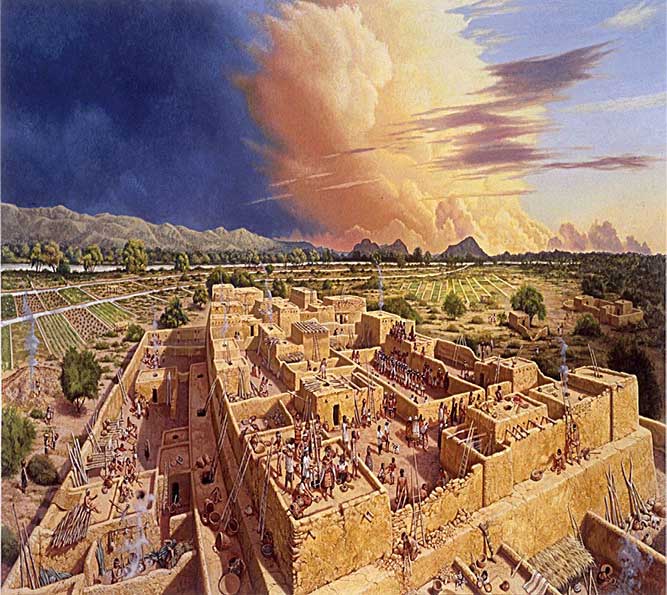
Pueblo Grande Museum and archaeological center is a modern museum and preservation facility in the heart of Phoenix. Including, hands-on indoor activities, well produced exhibits, and a walking tour of a ball court and a large ruin, the center offers a varied and enjoyable learning environment. Presentations are current of a multimedia and hands on nature, looking at and discussing the ancient Hohokam civilization the earliest Phoenix valley residents.

The Heard Museum features the art of historic and contemporary Native populations. Cutting edge relevant art is compared and contrasted to traditional and historic works. Some archaeological information is presented but the transition from archaic and extinct, to living cultures is at the forefront of the museum.
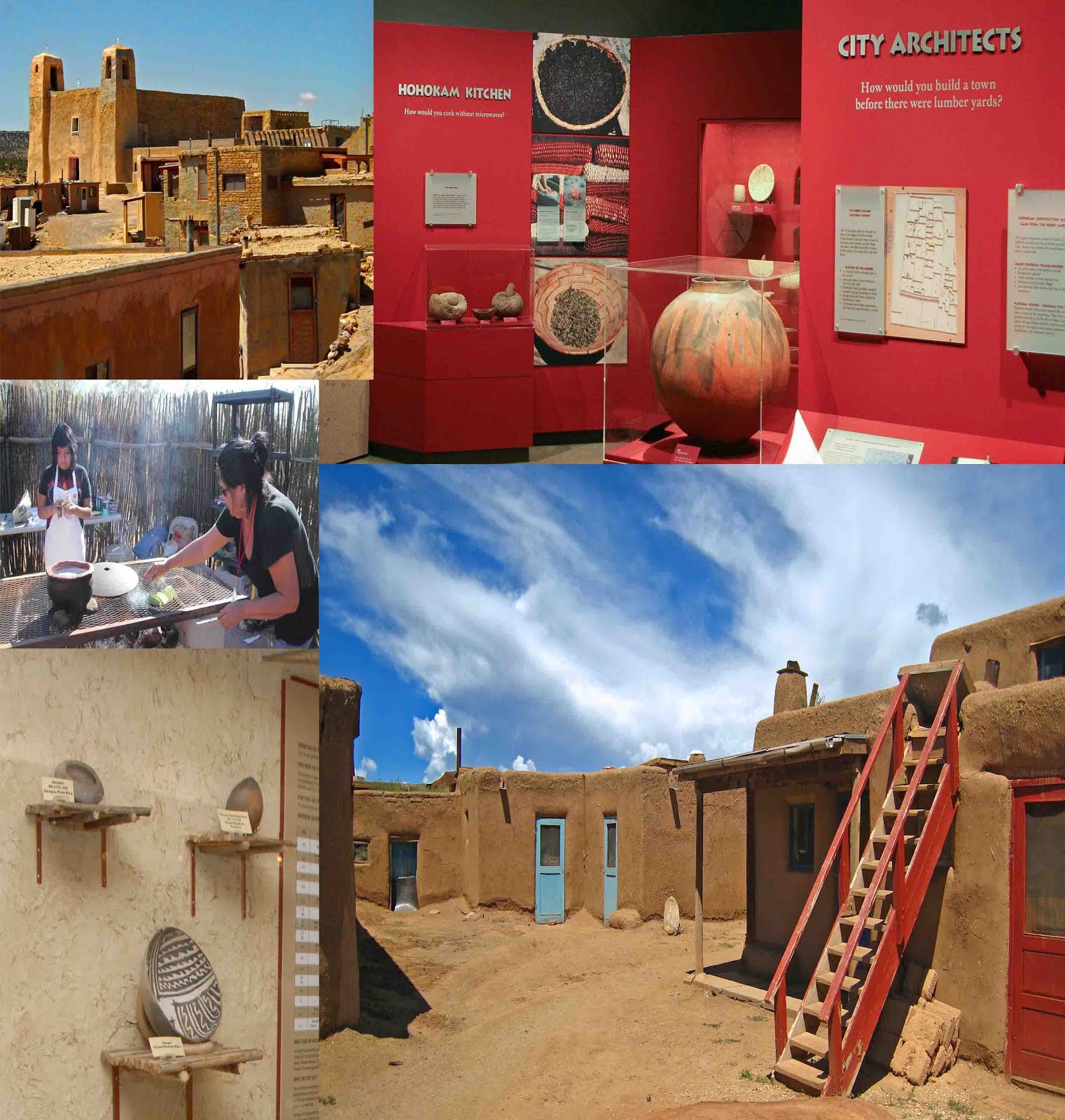

The Mesa Arts Center is the largest comprehensive visual and performing arts campus in Arizona. With it’s numerous classrooms, studios, and other venues, it is ideal for a variety of presentations and programs. My plan is to increase awareness of archaeological studies and work, living and active Native communities and their links to the past, and encourage the creation of art based on the viewers personal memories.


Excavating Memory
We live in a society that is leaving an empty archive. Archaeologist will need to retrieve information from hard drives in the future to learn how people communicated, viewed themselves and wrote. Letters once meditative, thoughtful acts, sealed with kiss and whiff of perfume, have been replaced by brief texts and tweets. Likewise keepsakes and souvenirs fill our dumps created without craft in third world sweatshops like most of our current material culture.


What is it that fascinates us with the tangible nature of keepsakes a souvenir? Are we losing our connection to touch to cyberculture? Will touch become more important to digital natives? If digital natives would prefer to post a picture, will they also collect a souvenir?


We are losing a generation that survived a world war, the Great Depression, the Cold War, civil rights and the Vietnam era. What remnants does this generation harbor, what keepsakes or items do they have to remind them of days gone by? I would like to know personally, but more than that shouldn’t we be asking seniors to pass on their information and experiences?


The Upper Strata Theory
We exist in the current strata, we are surrounded by the uppermost strata the one we are creating. Memory necessarily exists in the lower strata substrata. Archaeologist are concerned with mapping, defining, and recording levels of earth that form unique groupings or strata. Being able to view forest beyond us or the trees that make up our daily life takes a component of solace. All art is conveying the chaos of emotion from a point of calm. Recognizing our personal strat break, the moment when we move into a new strata can prove difficult. We move through history from day to day few of us will shape it. Like a bit of shell, a grain of sand we are part of a shore and vast history the ocean. Nonetheless what would we know of the Santa Fe Trail, of pioneer folks, the American Civil War were it not for journals, letters, newspaper articles and of course the creation of art.
Imaginary Souvenirs
I propose a set of activities to conjure up the past, combing the gathering of precious or frivolous items. Arranging them into a simple composition, as a point of discussion, a talisman to evoke memory. The experience would be film put online as a series of films.
The final step would be to replace the actual items with found, created items that represent moments or markers in the participants life, strata. Or as is discussed features in the strata, that might define the strata.
If not for remembering wouldn’t we forget?
So the program I am proposing reaches out and connects three very different cultural centers, involves the gathering of oral histories from seniors, a web based portion, several short films, the creation and exhibition of simple works of art. In the end the work will be a document of several seniors, their lives and memories. By putting the works on display, getting the local media involved, and the web based portion the program has the potential to be a wide reaching learning tool and catalyst for a larger dialogue, about our aging populations, the importance of preservation and cultural survival.
Part I
Several senior students from the Mesa Arts Center agree to take part in the project. They can be from any of the art programs at any level.
Part II
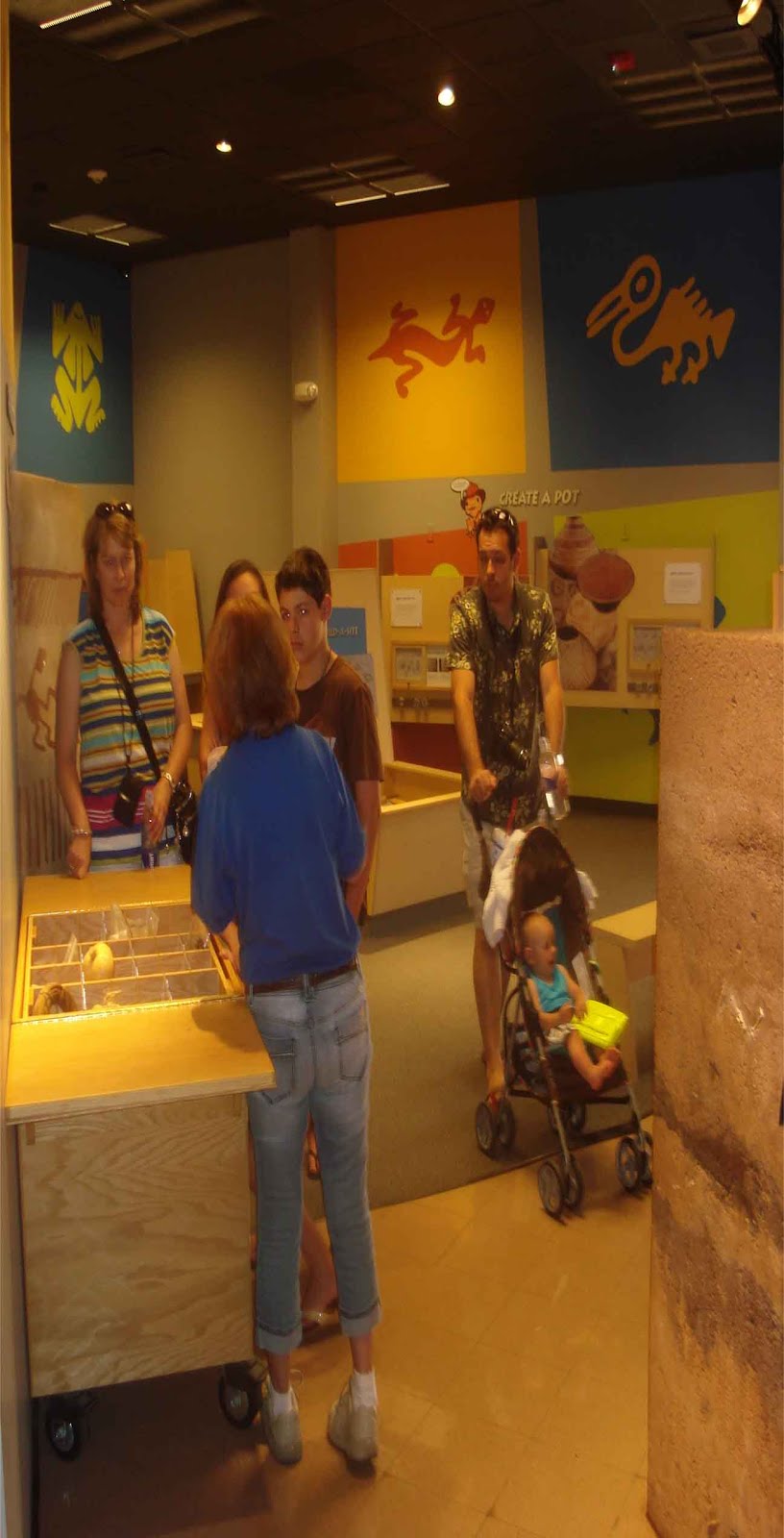
The project involves the use of archaeological theories, terms, and practices. A trip to the Pueblo Grande Archaeological Center and use of their online educational materials in order to explain and make the participants aware of the larger ideas in the project.
Discussion of strata, features, and other terms can be easily addressed at the museum as they have numerous very well made displays explaining the basics of archaeology.
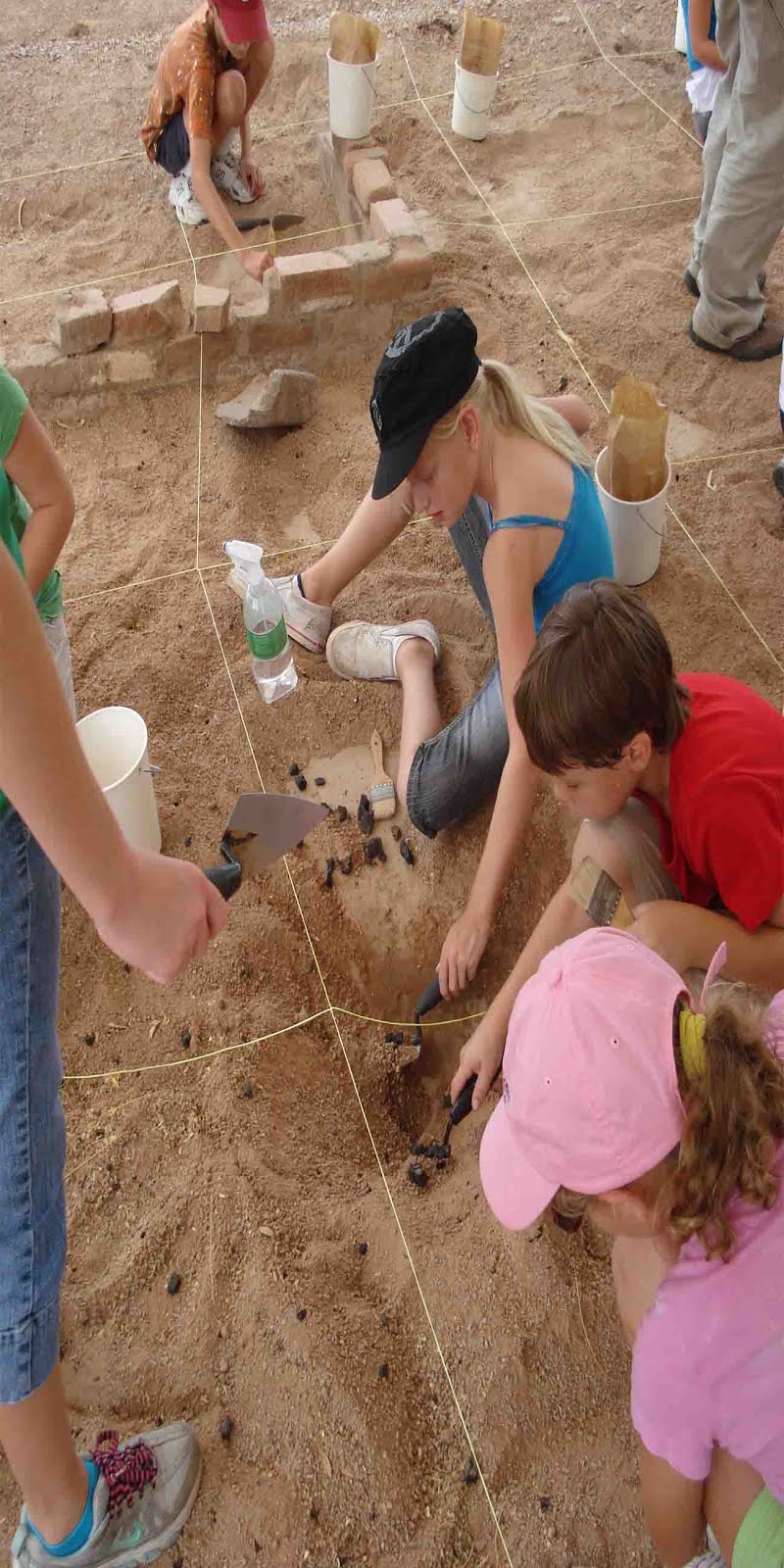
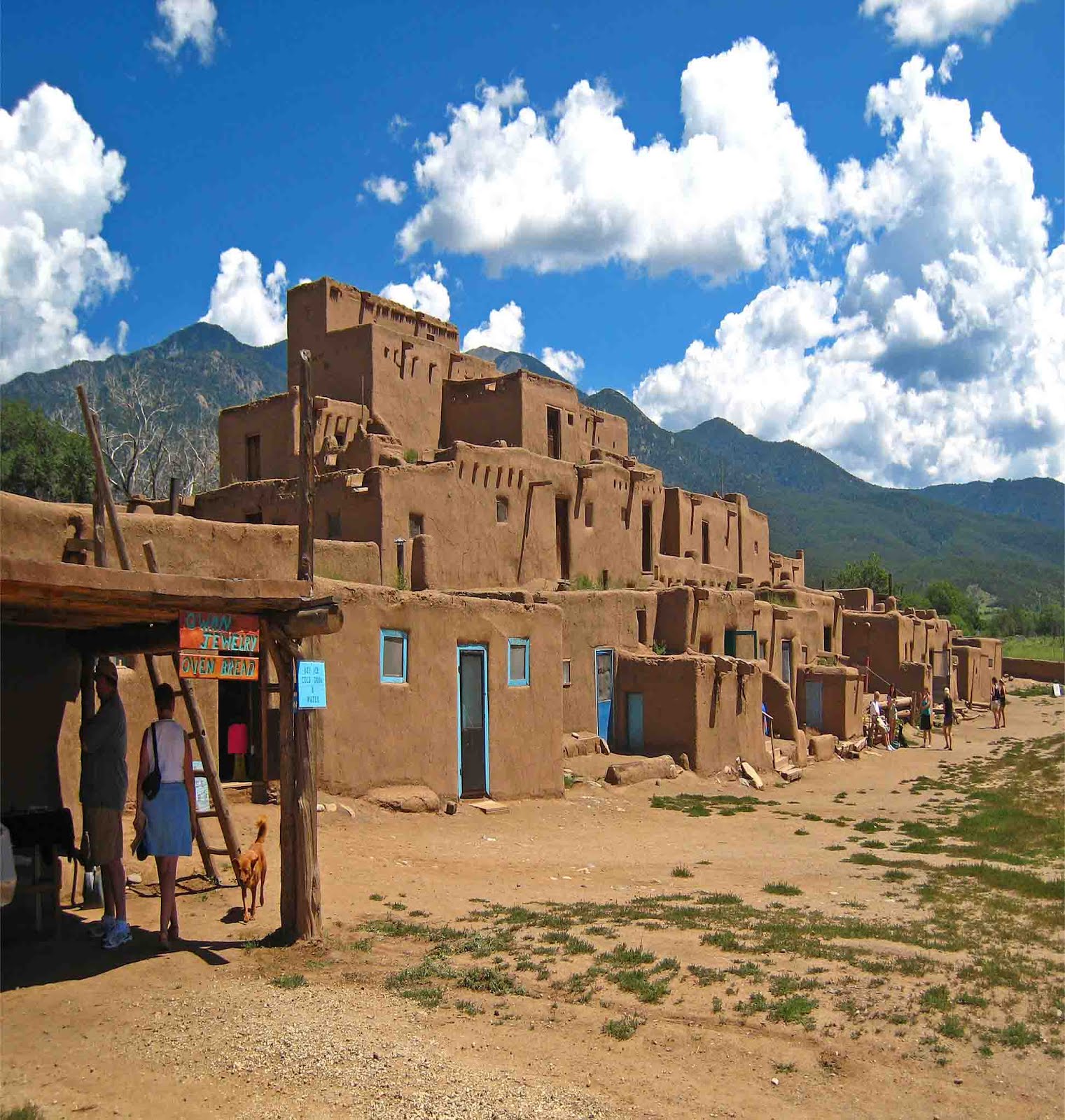
Tour the ruins discuss and try to imagine what went on at the site, what was life like?
Participants are encouraged to take notes record their thoughts. Pay close attention to the inclusion of any rock art, symbols and shape on pottery, other symbolic representation.
At this point my personal experiences in the field can be discussed and added to further illustrate the process of archaeology.
Part III
Onto the Heard Museum its mission and educational materials are geared toward living cultures though they have some archaeological materials. Discuss this transition and the balancing act the Heard has to perform. Look for language that may be offensive defining some cultures as extinct or historic. How do the works and images of Native Americans vary from popular images, in particular the images the seniors grew up with? How is culture defined versus subculture? Seniors are a subculture, what prejudice, misunderstanding, and difficulties do both Native populations and seniors face in the larger American mainstream? What about Native seniors? Are they treated as libraries of knowledge, elders, or thrown away?
Again the online materials from the Heard should be looked at addressed and notes taken.
Part IV
Excavating memory reaching the substrata
Discuss a strata profile the mapping of strata.
Participants should draw a simple profile the present at top, the major moments of their lives, as strata breaks and features. If a moment is to be a feature what sort of artifact would represent that feature in a drawing? A wedding ring, a pacifier etc..does it have to be that literal.
A closing discussion of how archaeological strata forms, how it is defined in the field and the dangers of misreading such information. For next time students are asked to bring a few tiny items that relate to their strata four to five. No photos allowed.
Part V
Students should then discuss their profile, the symbols in it and the items they brought in for the exercise. All of this should be filmed for the web portion.
Begin thinking symbolically a wedding ring or photo of a child are too easy what else could be used to represent these ideas and events in their lives?
For next time students are encouraged to visit a hardware store, thrift shop, rummage in their garage for found objects that can represent moments in their lives. Only four to five objects with one object representing the participant.
Part VI
Imaginary Souvenirs
Arrange the found objects, do they form a circle, do they form a line, a grid and why? Was it challenging to sum up a lifetime with four to five objects? Discuss why they picked what they picked and why the self portrait object is present. Create a composition with the objects that can be displayed.
Part VI
Talisman
Discuss the upper strata what is life like for the participants at this moment. Think of symbol a item or way to represent the now. This can be drawn, painted or found or modified found object.
further work into the substrata create symbols for various moments of their lives abstract or literal.
Closing
Sum up the experience the work, how did finding an object versus creating an object influence their final work? What did they learn about symbolism in art? Discuss Cornell, Nevelson, and Tinguely.
Display the works post the films ask the question can we do better with our subcultures including our seniors? Can we show more respect? Do other cultures have elders versus burdens? Is youth and beauty valued more than age and wisdom? Why? Is the ultimate price of consumer culture thrown away people?
References
Jonathan Sanchez
ARE 6933


Pueblo Grande Museum and Archeological Park
The centers educational mission and goals resources and displays were studied to determine if their site could be used my program.


Mesa Arts Center
The center will provide the classrooms and studios needed to complete the program. The program I have in mind is in keeping with the larger mission of the center as presented on their website.


The Heard Museum
The wording of the educational material the use of culturally sensitive language, that hints at larger holistic culturally inclusive approach. The program I purpose will be working with seniors for which culturally sensitive language might be new. Further, and understanding of the way we talk about native populations has changed over time with our attitudes toward these populations.


Adams, J. Room 13 and the Contemporary Practice of Artist-Learners Studies in Art Education, Vol. 47, No. 1 (Fall, 2005), pp. 23-33  
Developing a collaborative environment in the art classroom.


Americans for the Arts (2008) “Developing a logic model”
Used this as a general overview for approaching funding questions.


Wholeism idea getting students to see how things are interconnected and related. A complete reinventing of the classroom and an argument for such a reinvention. My thinking in this program is to fuse history, cultural, archaeological, and art studies into one presentation.


Cleveland, W., Morris, W., Takeshita, E. (2013) Learning Culture and Change: A Place-based Community Arts Training Model.


What is Art? What is Community?
What is Community Development?
What is the History and Ecology of Arts-based Community Development?
Where do I fit in this landscape?
All important ideas to consider as a basis. Further, the ideas of my proposed program are focused on helping to document members of the local community, and encouraging the community value their seniors.
I used this site to develop a sense for the general practices needed to write and present a proposal.


Cordell, L (2000) The Prehistoric Pueblo World. University of Arizona Press.
The term Ancestral Puebloan People versus Anasazi and the my basic knowledge of archaeology are taken from this book and others from Cordell.


Mann, C. (2012) 1493: The uncovering the World Columbus Created. Vintage books.


Adams, J. Room 13 and the Contemporary Practice of Artist-Learners Studies in Art Education, Vol. 47, No. 1 (Fall, 2005), pp. 23-33


“With the wider public, contemporary art has acquired significantly improved status and popularity; whilst the standing of these practices and their display and dissemination continues to grow, there has not been a similar bestowing of status or even legitimacy upon the production of art in schools. This article examines ways of analyzing classroom art practice as the collaborative art production of artist-teachers with artist-learners, a collaboration that is defined as a learning community of art practitioners, using cultural, community, and pedagogical theorists (Adams, 23).

While this project was being researched the City of Phoenix was making plans to slash spending for community centers, public pools, parks, and senior services. My art based project suddenly took on more importance as the cuts were in fact passed. To read more on this shameful stuff.
The city manager's trial budget contains a reduction that would close the Sunnyslope 

Community Center effective July 1, 2014. This would impact the summer program season. 

Please consult the city manager's budget page for more details.
some of what will happen
• Close 13 community centers, eliminating classes, programs and special events attended by about 500,000 residents: 84.5 positions (part-time workers); $6.22 million savings.
• Close three senior centers, which provide meals and recreation and social services to elderly and disabled residents: 11 positions; $697,000 savings.
http://www.azcentral.com/story/news/local/phoenix/2014/04/01/phoenix-budget-hearings-begin/7157555/


http://www.azcentral.com/story/news/local/phoenix/2014/04/02/phoenix-council-oks-city-manager-pay/7237235/

Sunday, April 6, 2014

An Overview of the Mesa Arts Center (Mesa, Arizona)


An Overview of the Mesa Arts Center (Mesa, Arizona)
The second part of my project on the Mesa Arts Center for ARE 6933 Art in Alternative Spaces (the UF art education program)
Mesa History
The first prehistoric people to live in Mesa were the Hohokams who flourished in the valley for over 1,500 years.  They were farmers and canal builders who lived in large communities of up to 500 people.  They are best remembered for their construction of a large network of irrigation canals.  The prehistoric Hohokam canals were incredible works of labor and engineering.  The hand dug system, irrigated over 110,000 acres and was the largest in the prehistoric world. Several archaeological sites can be viewed in the region today.
The Hohokam irrigation system transformed the soils of the Salt River Valley, allowing them to grow abundant crops for their use and for trade.  The Hohokam traded cotton cloth for seashells from the Gulf of California and for exotic birds from the Yucatan. Eventually, the Hohokam began to move from the area as they experienced a period of overpopulation, nutritional stress, and warfare.  They disappeared from the area by around 1450 and there has been no explanation as to where they went. The oral histories of several current tribes hint at ingestion or their incorporation into other tribes. 
Between the time of the decline of the Hohokam culture in the 15th century and the mid 1800's, no long-term settlement existed in the Mesa area.  Intermittent conflicts between the Pima and Maricopa along the Gila River and the Yavapai and the Apaches in the Salt River Valley, ensured that the region would not be settled during that time.  It was not until the establishment of Fort McDowell by the United States Army on 1865 that permanent settlement was created in the area.  It was believe that Canyon De Chelly on the site of the current Navajo nation was full of gold. Efforts were made to secure Arizona for mining interest, this included containing, subduing, and removing whole groups of people. The effectiveness of the Fort helped to pave the way for Anglo settlements in Phoenix, Tempe, and Mesa. 
In 1877, the first European pioneers settled the Mesa Area.  Sent from Utah by Brigham Young, the "Utah Company" was originally sent to establish "stations on the road" supporting the Church's expansion into Mexico.  They built their first homes and businesses in what is known as Lehi, now in Northern Mesa.  The rich soil near the Salt River was perfect for growing crops.  The Pima and Maricopa living in the area helped the pioneers carve out a life in the desert. Additionally, Tempe founder Charles Hayden loaned money to the company and other resources to help the colony create a community. 
The second group of Mormon settlers to arrive in the area was known as the Mesa Company.  Arriving on 1878, this group distinguished themselves by settling on the mesa top and by clearing ancient Native American canals so that water could be diverted to the higher ground.  By the early 1880's, nearly 300 people had settled in the Mesa area, most living within one square mile of downtown. 
Cultural, diversity has been a part of Mesa's history from the earliest days of the settlement.  The people who made up the companies of the Mormon pioneers, white Europeans in terms of ethnic background, and the Native American people already living in the area were soon joined by other immigrants including African Americans, Chinese, Mexican, Japanese, and Arabs, came to farm, to open businesses, and to work construction.  The town saw a major boom as construction of nearby Roosevelt Dam brought ample opportunity for work and leisure in town.
Agriculture was the foundation of the Mesa economy until after World War II. Dairy farming and stock-raising were an ever-increasing sector of the agricultural economy.  Much of the Mesa workforce was employed in agricultural-related industries.  Surprisingly, agriculture was an important factor in attracting tourists to Mesa by the early 20th century.  The Roosevelt Dam became a main attraction along with prehistoric ruins including the Hohokam ceremonial site Mesa Grande.
In the years following WWII, the economy underwent a major transformation.  Many factors were at work, including the mechanization of farming, the availability of affordable air conditioning units that made living year-round in the desert comfortable, the advent of the cold war, and the rising popularity of the Old West.  The economy began to change from agriculture to one based on the high tech, tourism, and service industries.
Over the years, the little town that began as a "station on the road," continued to thrive.  The population doubled every decade except during the 1920's, and the city soon far outgrew its original one-square-mile boundary.  The road has not always been easy for the citizens of Mesa.  The city has endured epidemics, two major depressions, and has sent its sons and daughters off to two World Wars.  Extreme heat, floods, and drought have also tested the spirit of its people. 
Unfortunately prejudice and racism have also impacted nearly all of Mesa's diverse communities to varying degrees over the years.  African American residents felt the impact of this more than any other groupLimited as to where they could buy homes and where they could send their children to school, black Americans had to work hard for even their basic rights.  Until desegregation took place in the 1950's, many minority citizens found themselves segregated in parks, swimming pools, movie theaters, dance halls, restaurants, and just about anywhere else local residents might congregate for business, play, and social activities.  Arizona was also the site of relocation camps for many Japanese Americans during World War II. However, since the end of that war and the desegregation that followed, ethnic minorities have made great strides.  Their stories-good, bad, and in-between-are as much a part of Mesa as any that might be told.
In May 1979, the city was named an All American City by the National Municipal League.  Mesa was honored for its efforts to address community problems through cooperation among citizens, schools, civic groups, and local governments, including the Salt River Pima-Maricopa Indian Community.
Today the city of Mesa is a thriving desert community bounded on all sides by smaller neighboring towns.  The only other city in Central Arizona that is larger than Mesa is Phoenix.  It is the 38th largest city in America and boasts a population of nearly 500,000.
Mesa has attracted industry giants like Boeing, General Motors, and Tally Industries while developing the old Williams Air Force Base into a full-scale regional and commercial airport.  In addition to boasting the largest community college in the nation, Mesa has attracted multiple educational institutions from around the nation have established college facilities in Mesa.  The city is also a leader in producing a thriving cultural economy with multiple museums and the Mesa Arts Center.
Without a doubt, Mesa will continue to grow and create an identity of its own in the Salt River Valley for years to come.
About the Mesa Arts Center
The movement to construct the Mesa Arts Center was championed by Wayne Brown, who served as the Mayor of Mesa from 1996 to 2000.Under Brown, the city passed a quality-of-life bond issue in 1998 to help pay for the center.Though he left office in 2000, Brown and his wife, Kathy, continued a private fundraising campaign for the arts center.The couple ultimately raised more than $4.5 million from the private sector beginning in 2000.The Mesa Arts Center's sculpture courtyard is named for Wayne Brown.
The Mesa Arts Center, owned and operated by the City of Mesa, is a unique, architecturally stunning, international award winning facility located in the heart of downtown Mesa. Arizona's largest arts center is home to four theaters, five art galleries, and 14 art studios. Guests, patrons, and students come to Mesa Arts Center to enjoy the finest live entertainment and performances, world-class visual art exhibitions, and outstanding arts education classes. The facility is an architectural showpiece and a destination for visitors to the Phoenix area. The Mesa Arts Center mission is to inspire people through engaging arts experiences that are diverse, accessible, and relevant.
The Mesa Arts Center is a performing and visual arts complex in downtown Mesa, Arizona. At more than 210,000 square feet, the $95 million facility, completed in 2005, is the largest comprehensive arts campus in the state.
The Mesa Arts Center encompasses four performance venues, from the intimate 99-seat Farnsworth Studio Theater to the 1,600-seat Ikeda Theater. The center is also home to the Mesa Contemporary Arts, which houses five art galleries with 5,500 sq ft of exhibition space. The facility also features 14 unique visual and performing art classroom studios. Multi-use areas throughout the campus provide both indoor and outdoor gathering and presentation spaces.
Located on a prominent site in the central core of Mesa, Arizona, the Mesa Arts Center is the signature project for this growing city, the 40th largest city in the United States and the largest suburban city in the country.The complex was designed by Boora Architects of Portland, Oregon in associations with DWL Architects + Planners, Inc., of Phoenix, 
References
Mesa History Museum
http://www.mesamuseum.org/
Boora architects 
http://www.boora.com/index.php/projects/planning/mesa_arts_center
Mesa Arts Center Website
http://www.mesaartscenter.com/
City of Mesa Website
http://www.mesaaz.gov/Government/welcome.aspx
Numerous interviews with staff, instructors, and volunteers.

Extensive discussions with education director Billy Jones.

Sunday, March 30, 2014

ARE 6933 UF Grad Art Education program
Art in Alternative Spaces

The theme of the my current course is art education in spaces outside of the classroom setting. We have been encourage to get to know our communities and find what grassroots, public, or established organizations exist as outlets for the arts.
I began my research in the art district of the Roosevelt and wanted to contrast it with what the Phoenix Art Museum and city of Phoenix had to offer, essentially grassroots, community grown art education versus, the art establishment. I got nowhere with either of the projects I attempted at the PAM and abandoned them.
I wandered up to the Mesa Arts Center and immediately had welcomed contact with education director Billy Jones. We arranged to meet and he was both willing and eager to help me along. Many thanks to Billy for being so receptive, friendly and informative.
The first strike at the project I visited the site and found they were hosting numerous projects and festivals at the same time including AZscitech fest, Spark Festival for creativity, and the Amyloid project, all of which are captured in the short film.
The next film will show my further research and visits to the classroom facilities.
So without further fanfare I present
Mesa Project part 1
http://www.youtube.com/watch?v=f4OAOIHVszo

Wednesday, February 26, 2014

Curios to Culture (The Heard Museum Phoenix and what it can tell us about the ever changing state of Native American art)

Jonathan Sanchez
From Curios to Culture
(The Heard Museum, Phoenix and what it can tell us about the ever changing state of Native American art.)
(The following is a research paper created for the UF Art Education program it was my final indie project for ARE 6048)
The process of contact that is to say Europeans, Asians and Africans learning of the multitude of languages, traditions, and art of the Americas is still on going. Manifest Destiny and its mania to create a country from sea to shining sea still reverberates with the folks in between those two coasts. Like all subcultures there is a push and pull from a dominant culture some ground is lost, some gained. The languages and traditions that are lost become fuel for the speculations of archaeologist, those that study dead cultures. But like so many sherds of pottery you can not know what was once cooked in the scattered pot, who sat around it, what was said or sung around the pot. Prevention is better than cure and preservation always preferred to recreation which brings us to the importance of the Heard Museum Phoenix.

Using the Heard Museum in Phoenix Arizona as a point of discussion I will present the evolution of Native arts and changing views of American Indian art while focusing specifically on the approach and methodology the Heard employs with regard to art education. The Heard provides an important repository of historic and contemporary items but also presents a unique art education perspective. Through the Heard’s continued efforts we can observe a model of multicultural and pluralistic art education in action.
The main achievements and contributions of the Heard to art education, are community outreach, preservation, creating a new standard and climate of multicultural education. They have reached these new levels and contributed to an overall discussion through direct tribal, peer, academic and community input. Hosting conferences, workshops, and displays intended to advance global understanding of the issues facing Native Americans as expressed through their art. The Heard took a historic stance but has not remained fixed it continues to contribute and shape advise and of course educate.
A Brief History
"The mission of the Heard Museum is to educate people about the arts, heritage and life ways of the Indigenous peoples of the Americas, with an emphasis on American Indian tribes of the Southwest" (Heard Museum website).
It was a small effort that grew like the Phoenix area itself. Now a major densely populated city, so too the museum has grown in size, mission, and prestige. It was once a novel idea to gather a few Indian curios here and there with little thought to the ancient and rich cultures that spawned the works, the Heard was to treat these items differently. Dwight and Maie Bartlett Heard founded a small museum in 1929 in a little known area somewhere out west. The collections and facilities have grown over the many years that followed, shifting from a home for dusty things on a shelf to living breathing community center.
Maie Heard continued the museum after her husband’s death in late 1929, acting as custodian, lecturer, director, curator and a guide for more than 20 years. The Heard Museum underwent significant growth upon Maie Heard's death in 1951.
In 1956, the Heard Museum Auxiliary was established to assist with educational programs. Today, the Heard Museum Guild numbers nearly 700.
In 1958, volunteers launched two aggressive fundraising projects, adding a museum shop and a fair which today draws nearly 20,000 people from all over the world.
The Jacobson Gallery of Indian Art doubled the original building in the late 60's.
Today
The Dorrance Education Center includes three classrooms used for school tour orientations, specialized tours or workshops. Nearly 400 schools in 20 states use the Heard as a source of curriculum material about American Indian heritage, and 10,000 Arizona school children visit annually.
One of the most significant additions to the museum was the small Berlin gallery. It represents the final step in a process from Curios to Culture. Native contemporary art is presented not as trinkets or tourist items but as the intellectual, spiritual, and cultural work of relevant modern artists. Like many that enjoy the benefits of this experiment in self rule we call America, Native Americans exist within and without American culture. Arizona is fortunate to be home to 22 tribal nations, each with its own distinct language and cultural traditions.
The museum shops and market provide an outlet for Native crafts producers and allow artisans of all kinds to sell their items.
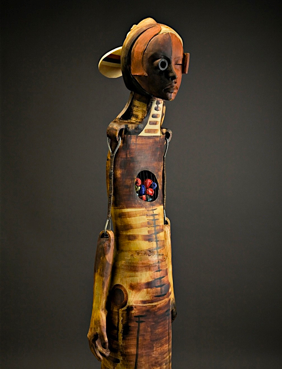
to fill that hole.pngRose Bean Simpson


Art Education at the Heard
It is in many ways impossible to remove any art from its culture and have it retain its meaning. The Heard does an amazing balancing act, rhetorically, and physically to maintain the concepts behind the art and the deeper cultural ties, and still present their collections as works of art. Often there is a distinction made. Items are referred to as works of art but also as, "cultural items". When I spoke with a few of the docent about the distinction it was noted that some items were tourist trap pieces that though now old never held ceremonial or religious medicine. The works are presented for their aesthetic and historic merits. There is often a fine line between such distinctions but all comments and inferences about the works must begin from a perspective of respect and cultural sensitivity.
Excerpt from the Heard website.
"Nearly 2,000 treasures including jewelry, cultural items, pottery, baskets, textiles, beadwork and more."
The education department has been a part of the museum from the beginning with tours and lectures and in the 1950's expanding to wider programing. Today they have three kid friendly facilities, two jam packed with hands on activities for wide range of ages. Kids and families can interact with video, a variety of games and are encouraged to draw and create throughout the education areas. There are items for download through the website, there are others to take home to continue the process outside of the museum, and plenty to do an interact with while at the museum. There is a real mix of aesthetic activity and acknowledgment of the culture and stories behind the visual concepts. Clearly the Heard is a modern museum shaped by Native input and state of the art museum thinking, the result of long evolutionary process.
On the Trail of Leaps and Bounds
I visited the Phoenix Art Museum and Heard Museum libraries, education departments, and archives. The impetus for the Phoenix Art Museum visit was a photocopy of a program for a workshop that seems to have happened in 1991. It was a joint project between the Heard and the PAM. The PAM portion was centered around an exhibit of Western Art entitled Myths of the West. Cowboys both real and of the Hollywood varietal were contrasted. Romantic paintings of Bierstadt and others were compared to stark documentary photos and all of this accompanied with lectures on all things, "Out West" (1990, Rizzoli). They would also address the marginalized Native presence in genre paintings and the early studio or staged works of Indians that contributed to a mythic image of Native Americans (1991, Gray).
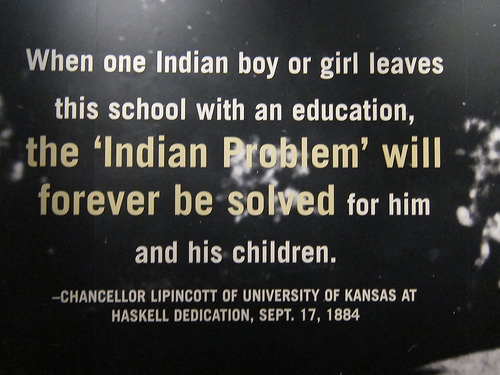
It has been a long process of allowing that Native Americans might have something to contribute other than posing for staged photos and paintings to satisfy white European fantasies about “Indians.” Natives held in captivity and allowed to draw or paint were at first mere curiosities (Heard Guide). Others in away schools attempting to solve the “indian problem through education” were forced to adapt European techniques of rendering and were largely deemed incapable of deeper intellectual processes (Stankiewicz, 48-49). away school sign.jpgAway school exhibit the Heard
Contemporary artists, writers, performers, pushed back during the “Red Power Movement,” and opened some minds to Native perspectives.  
The titles of the lectures perked my interest they seem to be exactly the sort stuff I was trying to unearth. Here are some excerpts.
Teaching Through Diversity (Leaps and Bounds) May 1st 1992 Phoenix Art Museum and Heard Museum
Program outline
"How do we approach the objects as art or artifact?
"Whose voice interprets the object?"
"How much do you need to know to interpret the object (or appreciate the object)?"
"Can a true understanding of an object from one culture be understood by another?"
"How do we teach sensitivity to and from other cultures?"
"What teaching methods do we use?"
"Are there any role models which we can follow?"
Sadly none of the papers made it into the archives of either museum, or anything more than that original photocopy survived the workshop. None the less these are all great questions to consider as art educators and were later transposed into the Museums Resource Guide.
I spoke with the PAM registrar and archivist and found that early Native works were out of the scope of the PAM's collecting. Native items of any kind were passed onto the Heard. I found this curious sure they have the corner on the market, the Heard works in conjunction with numerous tribes and tribal officials and the PAM has curators trained in other things ill-equipped to address Native art of a historic nature. But Scholder and others they were fair game, they were producing relevant contemporary art with Euro, Pop, and American references. They had it seems crossed an invisible line and were considered, "real art" worthy of a "real art collections or museums”.
PAM was ready to accept modern Native artists of a certain notoriety and caliber into their museum collection. I sat pondering this for some time and it still makes my head spin a bit, is this progress?  
Back at the Heard
Like all museums the Heard is dependent on the generosity of the general public. In the retirement Mecca of Arizona some of that generosity comes in the form of volunteers. A team of docents, guides, and general workers, allow the museum to function. I sat with a few of these docents to glean what I could about their training process, their attitudes toward the objects, and what they felt the museums goals were. All agreed that education was primary to the museum and that it was key to the survival of Native cultural ways. A re-education process was needed to help people re-learn or abandoned the often racist views that the general public hold about Native Americans.
Native images are all over the place in America from carved wooden figures, western movies, and sports mascots, but like other racial stereotypes of the past they tell us nothing of the actual people they characterize. The real challenge of the Heard is to use art and art education to break down these stereotypes and help the museum public, and the larger community walk away with a new understanding and respect.
Walking through the museum people watching and listening to the general public, I found younger people more open minded in this regard and the senior groups visiting, mouthing the old cliches, and even racial epitaphs. Ironically many of the museum workers are Native and must have to daily endure these slurs and cliches. One contrasting view was expressed by a young teenage girl that while viewing items from Pacific northwestern tribes stated, "Now I like these indians, I hate the ones in the Southwest." That is to say the Indians she encounters on a daily basis she claimed to hate versus the ones far away that she had no contact with.
The docents I spoke with seemed guarded and very careful of what they said and how they said it. They undergo an extensive training beginning with cultural sensitivity to combat the years of John Wayne films and sports mascots. Two years later some one is fully certified as a docent and must continue to be quizzed, observed, and tested routinely. They are presented a script of highlights or talking points but are encouraged to make the tours and talks their own over time. Respect, and approaching the art as part of a universal urge to create and make art continued return to the discussion. I left with the sense that the staff felt they were held up in a stronghold of ideas expressed through art. A stronghold besieged by overwhelming misinformation, racism, stereotypes, and “other” making forces. Art a kind of hostage in a larger cultural struggle can often be lost beneath the politics.
At the Heard looking for the origins of modern native art, a change in attitude or rhetoric, some clue as to when the shift from Curios to Culture actually occurred, I ran into some interesting historic documents.
AAM ICOM NAGPRA and the Politics of Culture
The 1970's saw sweeping legislation with far reaching and snowballing effects for the museum world. By laws were revised, codes modified, new ones written and museums from the top down are still reverberating from the shift. President Carter in 1978 signed into action Senate Joint Resolution 102 (Law No. 95-341, Heard Archives). The American Indian Religious Freedom Act was intended to reaffirm the rights tribes should have had under the US Constitution (Amendment 1). As these rights are guaranteed to all citizens in some cases it was defining Native people as such (versus enemy combatants, prisoners of war and the other quasi statuses some tribes held). For example, many southwestern American Indians returned from the second world war and found they had no right to vote (Navajo Code Talkers display, Heard Museum). American Indians were given back land during this time, and museums found themselves in conflict being mandated to return portions of their collections.
A Phoenix Gazette article in 1986 quotes then Heard director, Peter Walsh as saying, "It's been years since the Heard had any bones," that is to say human remains in its collection. The assumption is these items were long ago returned, handed over to tribal authorities or religious leaders. The inference is of course that they once had these things. Further, the question as to how many museums in 1987 when the article was published still had these items. Of the three southwestern museums that I have worked for as late as 1999 I can tell you that human remains were still in all three collections. At one museum I was blessed (smudged) by a Lakota medicine woman smoked the peace pipe, and given special instructions on how to treat and relocate the small collection of folks they were in possession of. A ceremony of cleansing, council advisement, tribal input and compliance from the staff, all to keep a few touchy items in the museums collection, what were other museums going through I wondered? We were willing to do these things out of respect though the few large funerary urns were once merely pretty pots.
The International Council on Museums convened to update and modify their stance with regards to the ethical treatment of cultural items. Similarly the American Association of Museums (AAM) decided to also review its 1922 charter and set of codes beginning in the 1970's. One of the key conferences was in fact held at the Heard in 1980 in conjunction with the National of American Indian Museums Association.
AAM Ethics Mandate was issued in 1987 stating, "Museums in the broadest sense, are institutions which hold their possessions in trust for all mankind and for the future of the human race." The resulting mandates and entire 30 page directive for the handling and possible return of sacred items. Here again is the rub a pleasing pot in a display case that is treated as a work of art might need to come out of the display case, might need to be treated differently or might need to be returned to a tribe altogether. Worldwide indigenous people watched these events annual meetings ensued and tribal people of all kinds began to assert their rights to their material culture in some cases their art.
Finally the Native American Graves Protection and Repatriation Act (NAGPRA) was enacted in 1990, adding further and greater legal power to tribal organizations and officials.
The Native American Fine Arts Movement
The Heard has comprised one of its most valuable and available items the Resource Guide. Through the museums education section on its website, anyone anywhere can obtain a concise history of Native American art to present. Outlining the major movements and artists from the 1800’s and early interest in Native art to contemporary giants like Fritz Scholder and Rose Bean Simpson.
Through the hatred, relocation, broken treaties, rape, murder, theft, disease, starvation and outright genocide that has been the Columbian exchange, Native artists have still found the strength to create and add their unique voices to art history. To blame the shift from Curios to Culture purely on legislation is to deny that Native artist themselves used their art to protest, shape and change minds and perhaps influence legislation.
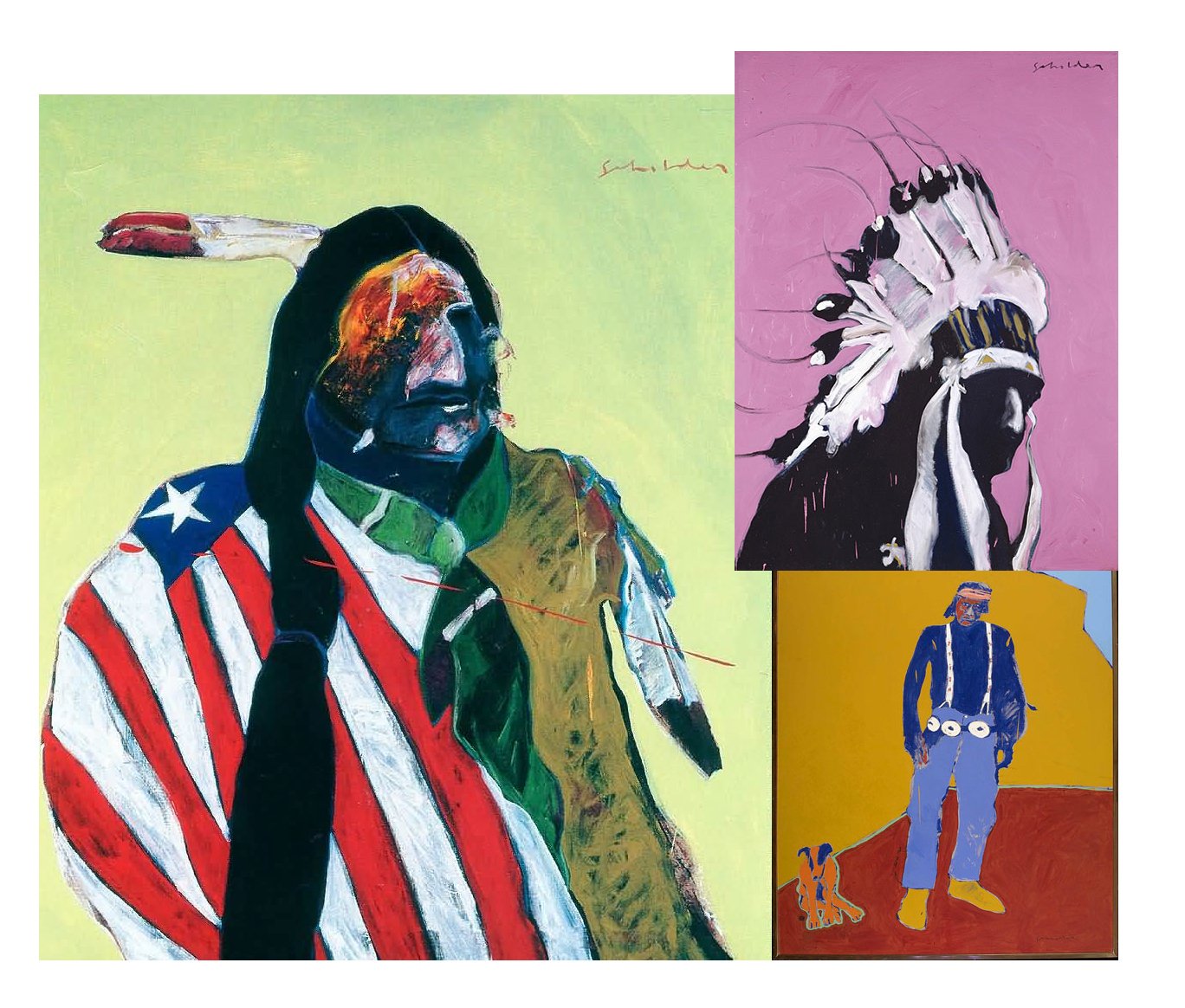
.scholder.jpgFritz Scholder
There are too many fantastic contemporary Native artists to mention but the example of Fritz Scholder is worth mentioning. His works grace the walls of numerous fine art museums he has been recognized and has ascended to a lofty place in the art world. His work as an art educator in Santa Fe helped shape a generation of young artists and his social and political critiques rocked the foundations of the art world.
Central to his art was the notion of being Native in the modern world, questioning assumptions of what is Indian, what it means to be Indian? He drew from this unique perspective to challenge existing notions about Native Americans and bring about and acceptance on different terms. The bravery of Scholder and countless others drove the shift from Curios to Culture it was their activism and criticism that broke down the barriers of the art world. The Heard celebrates this spirit and lives out these themes.
The Heard is an experiment in Native art education presented and created with Native artists, tribal officials and scholars jointly. That it is has managed to endure and flourish is remarkable and its preservation efforts have allowed for future generations to experience a wide range of cultural items. Most importantly is the community and culture of respect that the museum represents putting its educational mission into to action.


References further reading;
Masterpieces of Western American Art (1991) Gray, J. M&M Books.
Myth of the West, (1990) Rizzoli, NY.
Institute of American Indian Arts.
Stankiewicz, M.A. (2001) Roots of Art Education, Davis Publication.
Blandy, D (2008) Studies in Art Education, Vol. 50 #1 (Phoenix Art Museum archive)
Discussions with the PAM archivist and registrar
No Bones (1997) Phoenix Gazette
Deloria V. (2003)God is Red. Fulcrum Publishing
Shared Visions: Twentieth Century Native American Painters and Sculptors in the United States (1993). The New Press, W.W. Norton & Company, New York.
NAGPRA website http://www.cr.nps.gov/nagpra/ Heard Museum displays or archive
Joint Resolution 102 public (Law No. 95-341, Heard Archives)
Navajo Code Talkers (display)
Home (display)
Interviews with staff and docents.
Overheard conversations while visiting the Heard.
Notes from the Heard Conference of Native American Indian Museums Association 1980 (archive)
American Association of Museums, notes from the 1987 Conference, section entitled, “Code of Ethics for Museums (archive)
Notes from the ICOM Conference 1986 on ethics. (archive)
AAM literature on the history of the AAM (archive)
Post script
The Native American Graves Protection and Repatriation Act (NAGPRA, Pub. L. 101-601, 25 U.S.C. 3001 et seq., 104 Stat. 3048)  is a United States federal law enacted on 16 November 1990. The Act requires federal agencies and institutions that receive federal funding (such as national parks) to return Native American "cultural items" to lineal descendants and culturally affiliated Indian tribes and Native Hawaiian organizations. Cultural items according to the NAGPRA website are defined as, “human remains, funerary objects, sacred objects, and objects of cultural patrimony.” A program of federal grants assists in the repatriation process and the Secretary of the Interior may assess civil penalties on institutions that fail to comply.
NAGPRA also establishes procedures for the inadvertent discovery or planned excavation of Native American cultural items on federal or tribal lands. While these provisions do not apply to discoveries or excavations on private or state lands, the collection provisions of the Act may apply to Native American cultural items if they come under the control of an institution that receives federal funding.
Lastly, NAGPRA makes it a criminal offense to traffic in Native American human remains without right of possession or in Native American cultural items obtained in violation of the Act. Penalties for a first offense may result in 12 months imprisonment and a $100,000 fine.
PSS
Ironically I ran into one of our own Doug Blandy in the PAM archives, well a paper from him. It was part of a larger workshop on Pluralism creating a culture of pluralism through art education. The situation of the lost papers which seem to answer my every research question and meet my goals was addressed by Blandy. "Art educators' predilection is to focus on the problems and challenges of today without fully considering their antecedents or the larger history of the field. Our taste is now to act on this as a basis for deepening our historical knowledge and more fully understanding the genesis and evolution of the field" (Foreword to the symposium "Celebrating Pluralism"). Here was suddenly the goal of our current class, the goal of the paper and research at hand, and the goal of the missing workshop I was on the trail of, but they failed they did not pass this info on intact to future generations as Blandy suggested they should have.


All of the archivist involved looked embarrassed, flabbergasted, none the less the very thing Blandy warns us of had managed to happen, the information was lost.