Saturday, September 6, 2014

Mapping Three Walks

In my current class for the UF master in art education program we exploring maps, their symbolism, there historic significance, and there possibility to become a catalyst for conceptual artwork.
The assignment study our neighborhood and talk several walks to observe our environments first hand. Write about, think it all over end up with symbolic maps based on our findings. The first of which is this first illustration, focused on texture, how far can you go with the map idea?
collage_small.jpg
Texture map 1 From prickly cactus to granite and adobe, I have a wide range of textures in my midst, I tried to focus on them.


Mapping Three Walks (by Senses)
First, though author John R. Stilgoe states that “Outside Lies Magic,’ I can tell you at this time of year in Arizona outside lies suffering. The winter months in the state are temperate, freezing weather is rare, snow even rarer. But now I am at the end of the blistering brutal months of 100 degree plus temperature even as high as 120. So to relate my experience with walking, you have to first imagine yourself in a bake oven, that dry intense heat of a furnace or kiln. Despite this I do make three small walks regularly and when the weather is better or reasonable at least, a few short bike rides. In fact my wife and I often ride our bikes to work and to a local crepe and coffee shop. We decided on this area of Phoenix to not need to commute and for all of its many biking trails.
Ahwatukee
It is strangely ironic even tragic that a white person would name a town on stolen Gila indian land with a Crow word. It seems merely part of the sad nature of contact on this continent that settlers of European descent would slaughter starve or relocate millions of folks and then name a street, create a caricature mascot, or in my case name an “urban village” after them.
For those that might not know, anything Crow in this part of the world would be wildly out of place. None the less we are called Tukee’s as is the local corner bar and newspaper. The word is omnipresent in the village on every shopping center or business.
Following Ira Glass’s example I have decided to focus on my senses and map the three walks based on their dominant sense.
textures.jpgMap of textures 2


Walk One, Getting the Mail. (Sight)
One of the short walks I make every other day or so is to the small mail box enclosure. For some unknown reason my mailbox is on the other side of the complex, though there is a mailbox temple right next to my unit. The apartment complex I live in has a classical theme so there are columns, colonnades, tiny faux temples, all doric in nature.
temple.jpgmail_building.jpgoverview.jpg
One of these tiny temples is used to house a coke machine, another a shade area near the pool, and several house mailboxes. What the ancient Greeks would make of all this who knows.
cottonwood_copysmall.jpg
The path to the mailbox temple is lined in over hanging trees palo verde, weeping willow, cottonwood, palm, and even a few pines. Many beautiful patterns are formed by the shadows of these trees. The sound of wind in their branches is often one of the highlights of my day. Tiny paths meander through the buildings, past parking spaces, tiny charcoal grills, fragrant flowering plants, and the pool area.
pool copy.jpg


from my apartment to the mail area
apartment_blinds.jpgfirst_glimpse.jpgfront_door.jpgstairs.jpgsteps.jpgwinding_paths.jpgstucco.jpggrill.jpgopen_area.jpgpath.jpgabstract form copy.jpg
flowering_plants.jpgcopytrees.jpg

Near the mailbox doric temple is a tiny circular park of sorts with two doric themed benches and some large granitic rocks. A sort of southwestern zen garden of rocks, stones, and cacti it is one of my favorite places in my complex.

zen_garden.jpg
Needing to find my way, enjoying the shade and shadows, light through the trees, and eventually unlock my mailbox are all visually important, meaning sight is the primary sense used.


near_gym.jpg
Walk Two, Going to the Gym or Pool (Touch).
It starts with a coarse towel around my neck, then a hand on a metal guard rail
guard_rail.jpg
as I make my way down the steps into the blast of heat.
breezeway.jpg
Passing between buildings I enter a kind of breezeway and am thankful for the brief, disorienting shade, dark and cool.
misters.jpgmisters
I open a small gate and feel the cool of misters on my skin near the pool. I reach for the door of the gym and pull on its metal latch.
gym_door.jpggym_machines.jpg

As it swings open the thick cool of air conditioning and ceiling fans envelopes me. Sitting at a weight bench I grab a metal bar and pull on it numerous times until my muscles ache and strain. I repeat this process throughout the room my course towel covering each chair or bench. If I am by myself then I turn off the TVs in the room and have only the A/C and coke machine drone to listen to. If not I might be confronted with any manner of music from country to rap or the blare and drone of television. Finally I rest on the floor doing stomach exercises and notice the grit, tiny stones and sometimes cactus thorns scattered about. Occasionally I get pinched adjusting a machine or lifting dumbbells.
Clearly touch is the primary sense involved in the gym experience.
treadmill_view.jpg


arriba.jpg
Walk Three, Arriba’s Smell, Taste, (Sound)
Arriba’s is across the street from my apartment complex and though I wanted to include it for the sense of taste as a restaurant, I found it was also a good smell and sound walk.
To complete all of these walks I wanted to wait for the weather to cool off. 104 was as cool as I was going to get before midnight.
No sooner had I finished my last walk and I had to run for cover a massive dust storm moved. Some of the trees I had just photographed were getting rock even snapping, as the weather warning went up and all were advised to stay for hours until it passed.


giant_duststorm.jpgdust_storm2.jpg
massive dust storm that rolled in taking with it the blue sky and numerous branches.

gate.jpggate_lock.jpgbehind an iron gate locks and automatic doors.

Walking to the gate of my complex I hear wind in the trees and palm fronds that hang about. Opening the gate there is slight whine of rusted metal hinges, it closes with a clicking sound. If one sits, outside for any length of time around the complex the sound of distant traffic is easily heard, a major highway I 10 is mere blocks from the complex to the east. On the other sides are 48th (W) and Chandler blvd (N). Behind to the south is a barren waste and the Gila River Nation or Huhugam Tribal lands.
Hitting the street near my complex the sound of moderate traffic is heard and is constant during the day.
desert_garden.jpg
prickly_pears copy.jpg desert_landscaping.jpg
prickly pear and spanish bayonet or yucca
agave.jpglandscaping.jpg
pipe, saguaro, agave, and barrel cactus

Numerous cactus beds can be seen. Prickly pear fruit with their blood appearance, mesquite beans scattered everywhere and the familiar yellow flowers of the palo verde tree, cover walks and beds of rocks and sand. Giant saguaro, barrel, pipe, agave, prickly pear, and yucca cacti line the streets and flank buildings.
barrel_cactus.jpgpalo_verde.jpg
barrel cactus and palo verde

Arriving at Arriba’s a Mexican and New Mexican eatery the smell of oil, fire roasted chillies, and meat strikes your nose. Then the sound of two rocky fountains hits your ears and the chiming out of traditional mariachi music.
rocky_fountain.jpg

The sounds of a restaurant filter through as you approach the door, along with the sweet sugary cinnamon of churros. Flatware and glassware tinkle, plates and trays of food make their ceramic sounds and much needed glasses of water slosh as they are filled. Tacos and chips crunch, fajitas sizzle, and giant plastic menus close with a slap.
The shade and cool of the restaurant coupled with the fine mist emanating from the aforementioned rocky fountains, lends the feeling of being rescued from the brutal heat, the sense of an oasis perhaps. The hypnotic sound of the water, the healing feeling of cool water ingested and spraying on your skin, transport you in the way that warm fire does against the cold.

patio.jpg

In the end I am not sure which sense is best represented as the taste of the food is secondary to the feeling and sensory confusion of the outdoor patio restaurant. The New Mexico and Navajo fare the place serves is salty, zesty and fire hot. As your nose waters and hair curls one is reminded that chillies were ancient pueblo medicine good for circulation and helping to lube your sinuses so abused in the dry weather. Meats come smokey with the taste of the same sacred mesquite you must continually walk over to get anywhere. Being the hatch green chili season the scent of them being fire roasted alongside full corn cobs, still covered in their husks and every manner of creature that ended up on the grill, fills the air drifting all the way to the rez.
mesquite_beans.jpg
Mesquite beans that cover numerous area


abstract form copy.jpgFound map

This abstract form I discovered walking seems a kind of map. It seems to perfectly symbolize the three primary elements I live around. The organic winding landscaping, the concrete of paths, parking spaces, and houses and fields of stone and rocks scattered about.
Summing up
My methodology was to simply pay attention while doing these routines, see what appeared important to me. Being that to go to all three of these places I use the same path I felt I needed to combine them. Textures, organic versus stucco and concrete, and classical imaginings struck me at first. I captured some of this and then after listening to the, “This American Life,” segment I tried to break the walks into sensory files of sort.
Returning (and sidestepping a dust storm by mere minutes) to these paths I thought of them in terms of sensory experience. The big surprise was the restaurant which was so perfectly attuned to the climate and has create such an atmosphere that it was much a sound, textural, and certainly scent based experience. Like the segment suggested, smelling is more than classifying it is associating odors with memories and experiences. As I walked past the charcoal grills in my complex I could smell them and thought immediately of cookouts pool parties etc. Likewise the smell of cut grass and pool chemicals evoked childhood and suburban summer by the pool, in Florida. So these associations can transport us and jar us from our current reality.


In this mode of thinking I create several maps.
The first was of free association to the areas I traveled to on my mail and gym walks.
map of free association.jpgIt is very literal though symbols for the associations are visible. Sacred grove a sort feminine or fertility shape and the pool something watery.
Second I tried to get more symbolic more visual
aaociation map.jpg Classical temples, yin and yang, Venus of Willendorf figure take the place of words.


Third I tried to create an image that was only symbols for the above ideas
pure symbol map.jpg


Lastly I went away from the topic and explored the idea of a map related to the residents of my complex and my association with them.
map of neighborly relations.jpg

Sunday, August 31, 2014

Mapping Assignment

ART 5930c: Digital Studio: Mapping and Place
Lesson 2 assignment 1


Looking at the works of the artist Sol Lewitt and Mel Bochner in particular and maps in general I chose a small installation piece in my apartment. It exists in a tiny corner of the living room and being that it has its own light source provides a glow at dinner time or while hanging out in the evening. The work plays on the idea of the painting frame as a window frame so it implies space and depth. A small piece of rusted metal simulates a moon, a doll face and faux column are weathered with a copper patina to imply antiquity, all of these are intended to create depth perspective and the illusion of space.

The work is very similar to some of the Cornell type pieces Bochner has done, which seem (coincidentally) to be striving for the exact same goals. Through some of the reading it becomes apparent that the biggest struggle maps face is accounting for three dimensions, essentially putting squares on a round planet. As well maps that present statistics like statistics, can be misleading or simply leading. The works of Bochner and my piece here presented play upon our western sense of order, and spatial syntax.
The nice round number of three inches was discovered when measuring the width of my hand and the zone could be easily estimated in topographical or aerial sense. As the thing exists in three dimension contour lines could be easily be assigned based on the three inch scale.  
References
Mel Bochner Measurement.
Google images

USGS Fact Sheet on Scale. pubs.usgs.gov/
supporting youtube clip
 http://youtu.be/t3n3jR51f6I

Friday, May 9, 2014

A Wonderful Little Project

I had a wonderful time at the Musical Instrument Museum Phoenix 
presenting four educational programs over the last two days (May 8th and 9th)
MIM theater shortly before the students arrived


It was my second year as an Artist and Residence or AIR performer at the MIM after several years of presenting Museum Encounters. 
AIR set up


This year in addition to the theater presentation I also took part in a project with the Tesseract school.
Poster for the event and some student works at the Musical Instrument Museum.


I sat with several classrooms of students talked about my art, music, and life. The students then listened to my cds studied my art and made art of their own.


Student works and some Asian art on display in the 
education classroom.

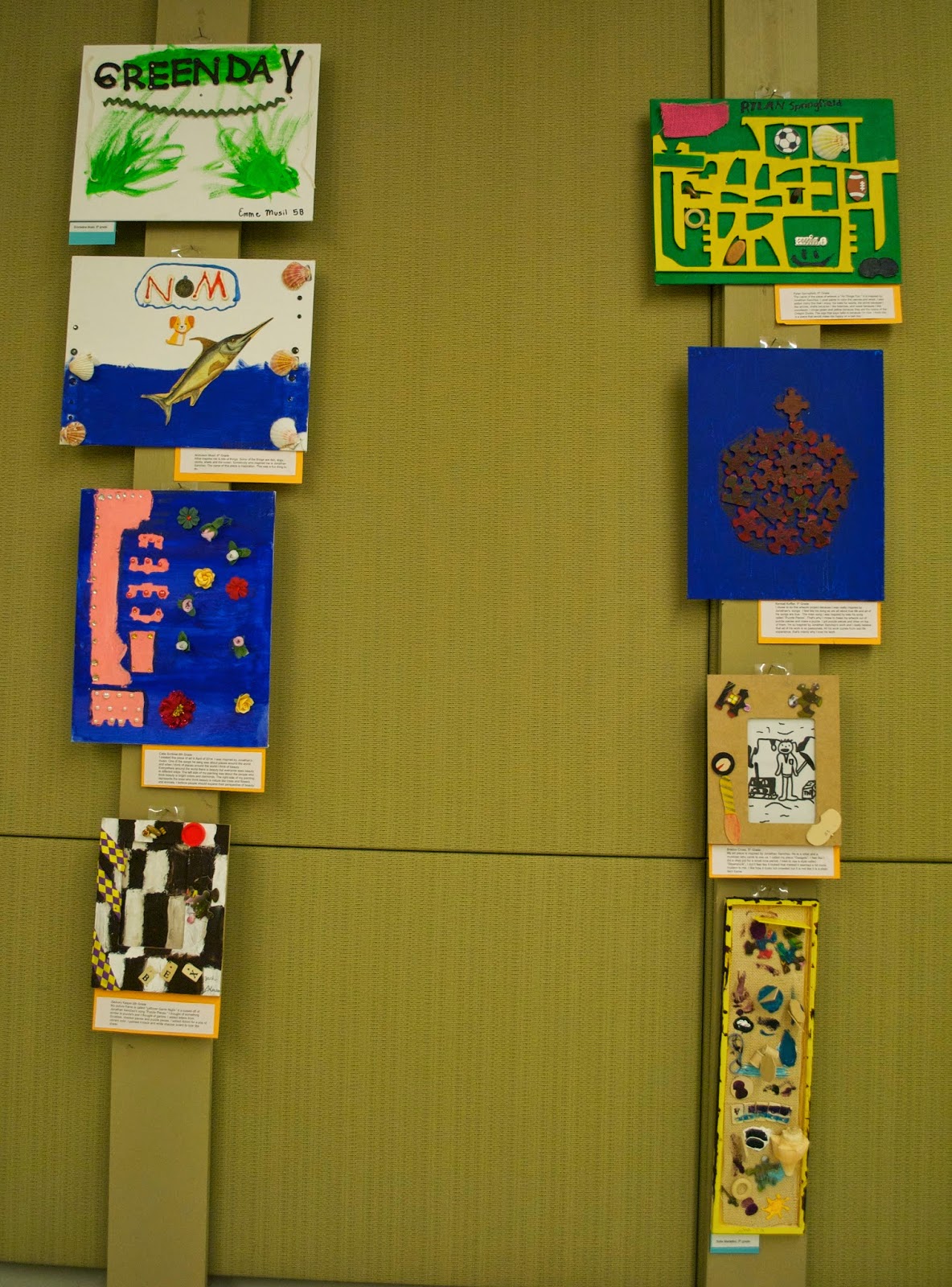
The MIM education classroom is ornate with shadow puppets gongs and other figures the student exhibit added to the over all experience. A small collection of my works and one from Regula were also displayed to show part of the inspiration for the students works.
Some of my works and one from Regula on display at the MIM.
It is always nice to have your works in a museum no matter what the occasion or situation many thanks to Shelly White, Barbara Perez and the wonderful students at the Tesseract school. It is a great feeling to anyone pay attention to your work be it music or visual art, but to know that my inspired the works of others is certainly a thrill.
A few works that I really enjoyed the piece below from Abigail Wilkes.


This whimsical work from Logan DeSayes


And this imaginative abstract piece from 


Best wishes to all of the students and teachers I got to meet, keep up the good work. Many thanks to the MIM for letting me take part in the AIR program.
Jonathan Sanchez (Johnny 2 Snakes)

 A few extra pics from the MIM

Shadow puppets in the MIM education classroom


Monday, April 21, 2014

Excavating Memory Project (part 3)

Link to the film overview of the project
Excavating Memory (part 3)
Mesa Arts Center OVerview (part 2)
Mesa Arts Center Spark Festival (part 1)


Excavating Memory Project
Three components
Pueblo Grande-Archaeology
The Heard Museum-Ethnology
Mesa Art Center-Fine Art


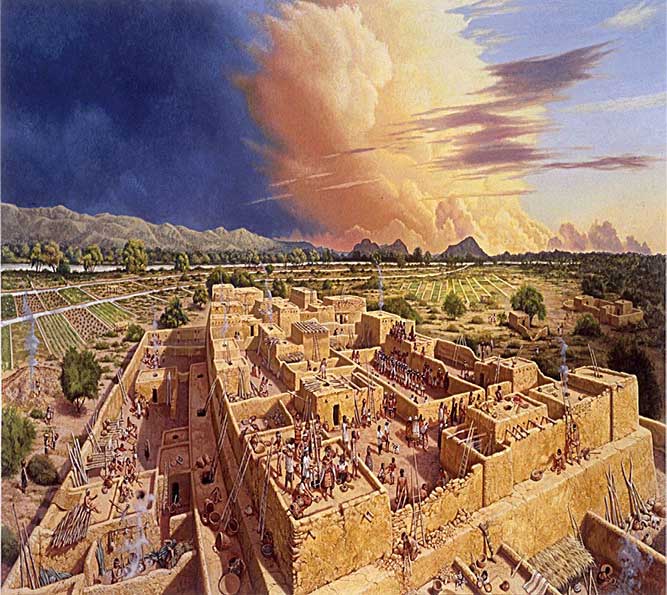
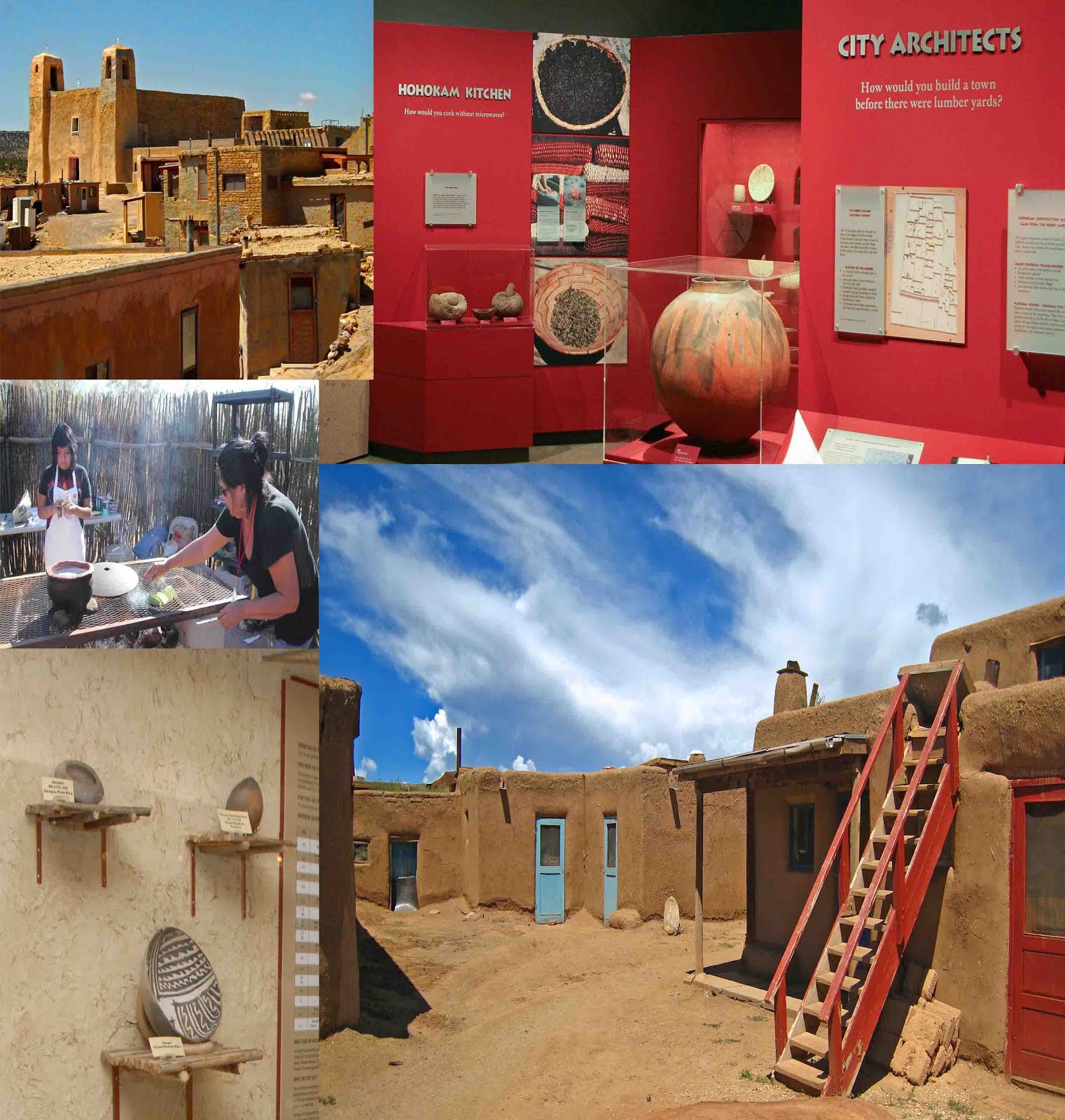
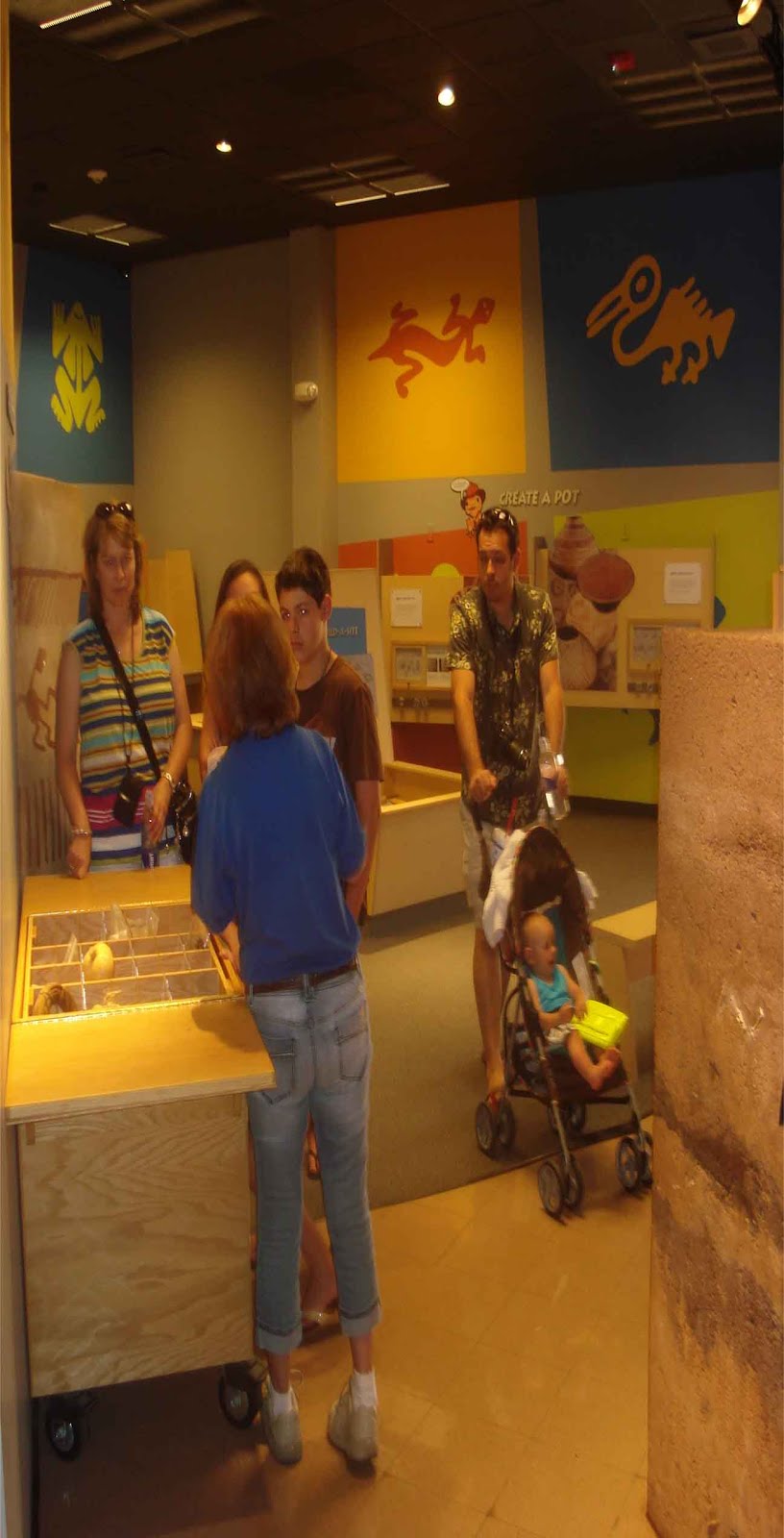
Pueblo Grande Museum and archaeological center is a modern museum and preservation facility in the heart of Phoenix. Including, hands-on indoor activities, well produced exhibits, and a walking tour of a ball court and a large ruin, the center offers a varied and enjoyable learning environment. Presentations are current of a multimedia and hands on nature, looking at and discussing the ancient Hohokam civilization the earliest Phoenix valley residents.


The Heard Museum features the art of historic and contemporary Native populations. Cutting edge relevant art is compared and contrasted to traditional and historic works. Some archaeological information is presented but the transition from archaic and extinct, to living cultures is at the forefront of the museum.


The Mesa Arts Center is the largest comprehensive visual and performing arts campus in Arizona. With it’s numerous classrooms, studios, and other venues, it is ideal for a variety of presentations and programs. My plan is to increase awareness of archaeological studies and work, living and active Native communities and their links to the past, and encourage the creation of art based on the viewers personal memories.


Excavating Memory
We live in a society that is leaving an empty archive. Archaeologist will need to retrieve information from hard drives in the future to learn how people communicated, viewed themselves and wrote. Letters once meditative, thoughtful acts, sealed with kiss and whiff of perfume, have been replaced by brief texts and tweets. Likewise keepsakes and souvenirs fill our dumps created without craft in third world sweatshops like most of our current material culture.


What is it that fascinates us with the tangible nature of keepsakes a souvenir? Are we losing our connection to touch to cyberculture? Will touch become more important to digital natives? If digital natives would prefer to post a picture, will they also collect a souvenir?


We are losing a generation that survived a world war, the Great Depression, the Cold War, civil rights and the Vietnam era. What remnants does this generation harbor, what keepsakes or items do they have to remind them of days gone by? I would like to know personally, but more than that shouldn’t we be asking seniors to pass on their information and experiences?


The Upper Strata Theory
We exist in the current strata, we are surrounded by the uppermost strata the one we are creating. Memory necessarily exists in the lower strata substrata. Archaeologist are concerned with mapping, defining, and recording levels of earth that form unique groupings or strata. Being able to view forest beyond us or the trees that make up our daily life takes a component of solace. All art is conveying the chaos of emotion from a point of calm. Recognizing our personal strat break, the moment when we move into a new strata can prove difficult. We move through history from day to day few of us will shape it. Like a bit of shell, a grain of sand we are part of a shore and vast history the ocean. Nonetheless what would we know of the Santa Fe Trail, of pioneer folks, the American Civil War were it not for journals, letters, newspaper articles and of course the creation of art.
Imaginary Souvenirs
I propose a set of activities to conjure up the past, combing the gathering of precious or frivolous items. Arranging them into a simple composition, as a point of discussion, a talisman to evoke memory. The experience would be film put online as a series of films.
The final step would be to replace the actual items with found, created items that represent moments or markers in the participants life, strata. Or as is discussed features in the strata, that might define the strata.
If not for remembering wouldn’t we forget?
So the program I am proposing reaches out and connects three very different cultural centers, involves the gathering of oral histories from seniors, a web based portion, several short films, the creation and exhibition of simple works of art. In the end the work will be a document of several seniors, their lives and memories. By putting the works on display, getting the local media involved, and the web based portion the program has the potential to be a wide reaching learning tool and catalyst for a larger dialogue, about our aging populations, the importance of preservation and cultural survival.
Part I
Several senior students from the Mesa Arts Center agree to take part in the project. They can be from any of the art programs at any level.
Part II
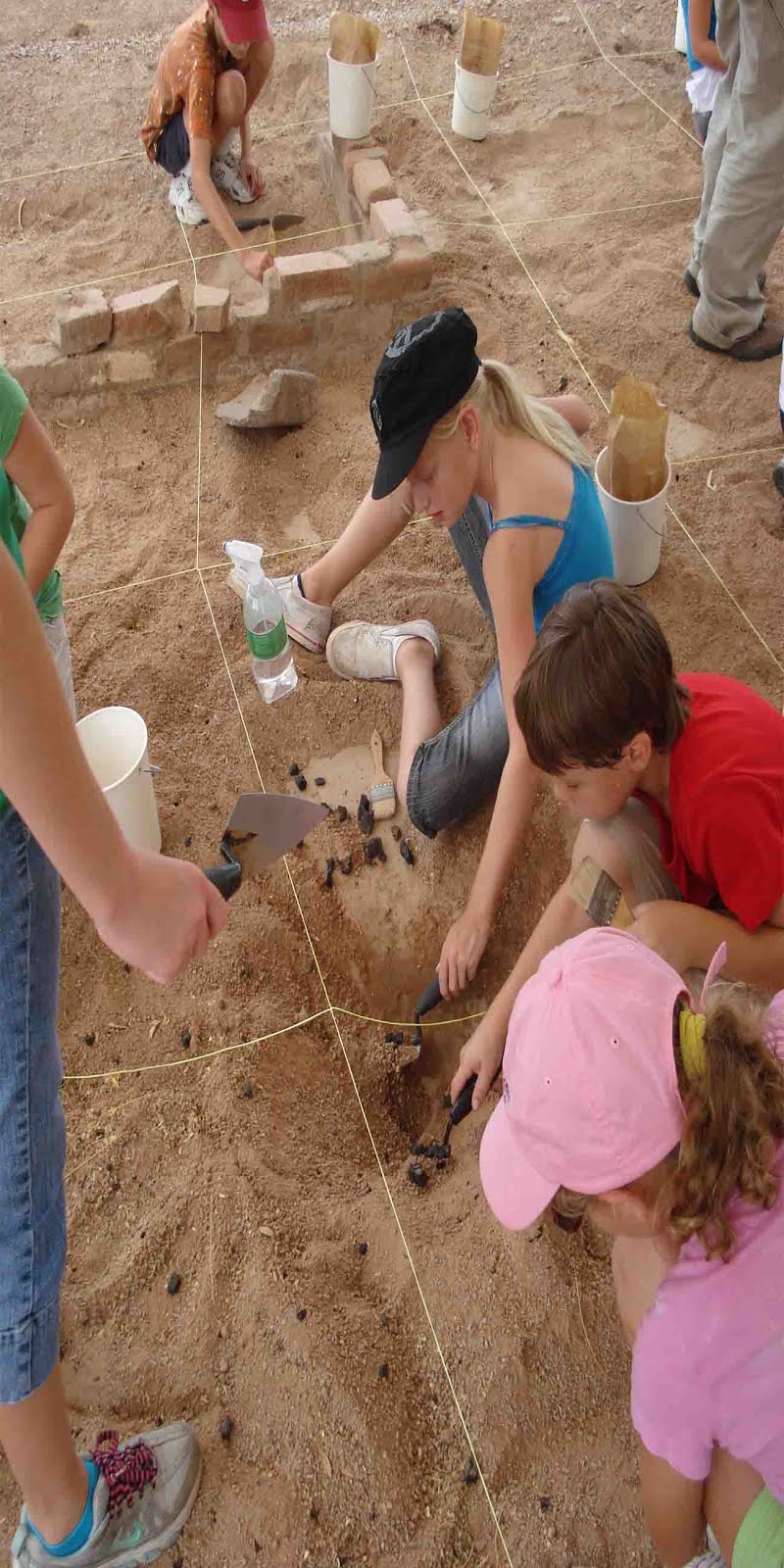
The project involves the use of archaeological theories, terms, and practices. A trip to the Pueblo Grande Archaeological Center and use of their online educational materials in order to explain and make the participants aware of the larger ideas in the project.
Discussion of strata, features, and other terms can be easily addressed at the museum as they have numerous very well made displays explaining the basics of archaeology.
Tour the ruins discuss and try to imagine what went on at the site, what was life like?
Participants are encouraged to take notes record their thoughts. Pay close attention to the inclusion of any rock art, symbols and shape on pottery, other symbolic representation.
At this point my personal experiences in the field can be discussed and added to further illustrate the process of archaeology.
Part III
Onto the Heard Museum its mission and educational materials are geared toward living cultures though they have some archaeological materials. Discuss this transition and the balancing act the Heard has to perform. Look for language that may be offensive defining some cultures as extinct or historic. How do the works and images of Native Americans vary from popular images, in particular the images the seniors grew up with? How is culture defined versus subculture? Seniors are a subculture, what prejudice, misunderstanding, and difficulties do both Native populations and seniors face in the larger American mainstream? What about Native seniors? Are they treated as libraries of knowledge, elders, or thrown away?
Again the online materials from the Heard should be looked at addressed and notes taken.
Part IV
Excavating memory reaching the substrata
Discuss a strata profile the mapping of strata.
Participants should draw a simple profile the present at top, the major moments of their lives, as strata breaks and features. If a moment is to be a feature what sort of artifact would represent that feature in a drawing? A wedding ring, a pacifier etc..does it have to be that literal.
A closing discussion of how archaeological strata forms, how it is defined in the field and the dangers of misreading such information. For next time students are asked to bring a few tiny items that relate to their strata four to five. No photos allowed.
Part V
Students should then discuss their profile, the symbols in it and the items they brought in for the exercise. All of this should be filmed for the web portion.
Begin thinking symbolically a wedding ring or photo of a child are too easy what else could be used to represent these ideas and events in their lives?
For next time students are encouraged to visit a hardware store, thrift shop, rummage in their garage for found objects that can represent moments in their lives. Only four to five objects with one object representing the participant.
Part VI
Imaginary Souvenirs
Arrange the found objects, do they form a circle, do they form a line, a grid and why? Was it challenging to sum up a lifetime with four to five objects? Discuss why they picked what they picked and why the self portrait object is present. Create a composition with the objects that can be displayed.
Part VI
Talisman
Discuss the upper strata what is life like for the participants at this moment. Think of symbol a item or way to represent the now. This can be drawn, painted or found or modified found object.
further work into the substrata create symbols for various moments of their lives abstract or literal.
Closing
Sum up the experience the work, how did finding an object versus creating an object influence their final work? What did they learn about symbolism in art? Discuss Cornell, Nevelson, and Tinguely.
Display the works post the films ask the question can we do better with our subcultures including our seniors? Can we show more respect? Do other cultures have elders versus burdens? Is youth and beauty valued more than age and wisdom? Why? Is the ultimate price of consumer culture thrown away people?
References
Jonathan Sanchez
ARE 6933


Pueblo Grande Museum and Archeological Park
The centers educational mission and goals resources and displays were studied to determine if their site could be used my program.


Mesa Arts Center
The center will provide the classrooms and studios needed to complete the program. The program I have in mind is in keeping with the larger mission of the center as presented on their website.


The Heard Museum
The wording of the educational material the use of culturally sensitive language, that hints at larger holistic culturally inclusive approach. The program I purpose will be working with seniors for which culturally sensitive language might be new. Further, and understanding of the way we talk about native populations has changed over time with our attitudes toward these populations.


Adams, J. Room 13 and the Contemporary Practice of Artist-Learners Studies in Art Education, Vol. 47, No. 1 (Fall, 2005), pp. 23-33  
Developing a collaborative environment in the art classroom.


Americans for the Arts (2008) “Developing a logic model”
Used this as a general overview for approaching funding questions.


Wholeism idea getting students to see how things are interconnected and related. A complete reinventing of the classroom and an argument for such a reinvention. My thinking in this program is to fuse history, cultural, archaeological, and art studies into one presentation.


Cleveland, W., Morris, W., Takeshita, E. (2013) Learning Culture and Change: A Place-based Community Arts Training Model.


What is Art? What is Community?
What is Community Development?
What is the History and Ecology of Arts-based Community Development?
Where do I fit in this landscape?
All important ideas to consider as a basis. Further, the ideas of my proposed program are focused on helping to document members of the local community, and encouraging the community value their seniors.
I used this site to develop a sense for the general practices needed to write and present a proposal.


Cordell, L (2000) The Prehistoric Pueblo World. University of Arizona Press.
The term Ancestral Puebloan People versus Anasazi and the my basic knowledge of archaeology are taken from this book and others from Cordell.


Mann, C. (2012) 1493: The uncovering the World Columbus Created. Vintage books.


Adams, J. Room 13 and the Contemporary Practice of Artist-Learners Studies in Art Education, Vol. 47, No. 1 (Fall, 2005), pp. 23-33


“With the wider public, contemporary art has acquired significantly improved status and popularity; whilst the standing of these practices and their display and dissemination continues to grow, there has not been a similar bestowing of status or even legitimacy upon the production of art in schools. This article examines ways of analyzing classroom art practice as the collaborative art production of artist-teachers with artist-learners, a collaboration that is defined as a learning community of art practitioners, using cultural, community, and pedagogical theorists (Adams, 23).

While this project was being researched the City of Phoenix was making plans to slash spending for community centers, public pools, parks, and senior services. My art based project suddenly took on more importance as the cuts were in fact passed. To read more on this shameful stuff.
The city manager's trial budget contains a reduction that would close the Sunnyslope 

Community Center effective July 1, 2014. This would impact the summer program season. 

Please consult the city manager's budget page for more details.
some of what will happen
• Close 13 community centers, eliminating classes, programs and special events attended by about 500,000 residents: 84.5 positions (part-time workers); $6.22 million savings.
• Close three senior centers, which provide meals and recreation and social services to elderly and disabled residents: 11 positions; $697,000 savings.
http://www.azcentral.com/story/news/local/phoenix/2014/04/01/phoenix-budget-hearings-begin/7157555/


http://www.azcentral.com/story/news/local/phoenix/2014/04/02/phoenix-council-oks-city-manager-pay/7237235/

Sunday, April 6, 2014

An Overview of the Mesa Arts Center (Mesa, Arizona)


An Overview of the Mesa Arts Center (Mesa, Arizona)
The second part of my project on the Mesa Arts Center for ARE 6933 Art in Alternative Spaces (the UF art education program)
Mesa History
The first prehistoric people to live in Mesa were the Hohokams who flourished in the valley for over 1,500 years.  They were farmers and canal builders who lived in large communities of up to 500 people.  They are best remembered for their construction of a large network of irrigation canals.  The prehistoric Hohokam canals were incredible works of labor and engineering.  The hand dug system, irrigated over 110,000 acres and was the largest in the prehistoric world. Several archaeological sites can be viewed in the region today.
The Hohokam irrigation system transformed the soils of the Salt River Valley, allowing them to grow abundant crops for their use and for trade.  The Hohokam traded cotton cloth for seashells from the Gulf of California and for exotic birds from the Yucatan. Eventually, the Hohokam began to move from the area as they experienced a period of overpopulation, nutritional stress, and warfare.  They disappeared from the area by around 1450 and there has been no explanation as to where they went. The oral histories of several current tribes hint at ingestion or their incorporation into other tribes. 
Between the time of the decline of the Hohokam culture in the 15th century and the mid 1800's, no long-term settlement existed in the Mesa area.  Intermittent conflicts between the Pima and Maricopa along the Gila River and the Yavapai and the Apaches in the Salt River Valley, ensured that the region would not be settled during that time.  It was not until the establishment of Fort McDowell by the United States Army on 1865 that permanent settlement was created in the area.  It was believe that Canyon De Chelly on the site of the current Navajo nation was full of gold. Efforts were made to secure Arizona for mining interest, this included containing, subduing, and removing whole groups of people. The effectiveness of the Fort helped to pave the way for Anglo settlements in Phoenix, Tempe, and Mesa. 
In 1877, the first European pioneers settled the Mesa Area.  Sent from Utah by Brigham Young, the "Utah Company" was originally sent to establish "stations on the road" supporting the Church's expansion into Mexico.  They built their first homes and businesses in what is known as Lehi, now in Northern Mesa.  The rich soil near the Salt River was perfect for growing crops.  The Pima and Maricopa living in the area helped the pioneers carve out a life in the desert. Additionally, Tempe founder Charles Hayden loaned money to the company and other resources to help the colony create a community. 
The second group of Mormon settlers to arrive in the area was known as the Mesa Company.  Arriving on 1878, this group distinguished themselves by settling on the mesa top and by clearing ancient Native American canals so that water could be diverted to the higher ground.  By the early 1880's, nearly 300 people had settled in the Mesa area, most living within one square mile of downtown. 
Cultural, diversity has been a part of Mesa's history from the earliest days of the settlement.  The people who made up the companies of the Mormon pioneers, white Europeans in terms of ethnic background, and the Native American people already living in the area were soon joined by other immigrants including African Americans, Chinese, Mexican, Japanese, and Arabs, came to farm, to open businesses, and to work construction.  The town saw a major boom as construction of nearby Roosevelt Dam brought ample opportunity for work and leisure in town.
Agriculture was the foundation of the Mesa economy until after World War II. Dairy farming and stock-raising were an ever-increasing sector of the agricultural economy.  Much of the Mesa workforce was employed in agricultural-related industries.  Surprisingly, agriculture was an important factor in attracting tourists to Mesa by the early 20th century.  The Roosevelt Dam became a main attraction along with prehistoric ruins including the Hohokam ceremonial site Mesa Grande.
In the years following WWII, the economy underwent a major transformation.  Many factors were at work, including the mechanization of farming, the availability of affordable air conditioning units that made living year-round in the desert comfortable, the advent of the cold war, and the rising popularity of the Old West.  The economy began to change from agriculture to one based on the high tech, tourism, and service industries.
Over the years, the little town that began as a "station on the road," continued to thrive.  The population doubled every decade except during the 1920's, and the city soon far outgrew its original one-square-mile boundary.  The road has not always been easy for the citizens of Mesa.  The city has endured epidemics, two major depressions, and has sent its sons and daughters off to two World Wars.  Extreme heat, floods, and drought have also tested the spirit of its people. 
Unfortunately prejudice and racism have also impacted nearly all of Mesa's diverse communities to varying degrees over the years.  African American residents felt the impact of this more than any other groupLimited as to where they could buy homes and where they could send their children to school, black Americans had to work hard for even their basic rights.  Until desegregation took place in the 1950's, many minority citizens found themselves segregated in parks, swimming pools, movie theaters, dance halls, restaurants, and just about anywhere else local residents might congregate for business, play, and social activities.  Arizona was also the site of relocation camps for many Japanese Americans during World War II. However, since the end of that war and the desegregation that followed, ethnic minorities have made great strides.  Their stories-good, bad, and in-between-are as much a part of Mesa as any that might be told.
In May 1979, the city was named an All American City by the National Municipal League.  Mesa was honored for its efforts to address community problems through cooperation among citizens, schools, civic groups, and local governments, including the Salt River Pima-Maricopa Indian Community.
Today the city of Mesa is a thriving desert community bounded on all sides by smaller neighboring towns.  The only other city in Central Arizona that is larger than Mesa is Phoenix.  It is the 38th largest city in America and boasts a population of nearly 500,000.
Mesa has attracted industry giants like Boeing, General Motors, and Tally Industries while developing the old Williams Air Force Base into a full-scale regional and commercial airport.  In addition to boasting the largest community college in the nation, Mesa has attracted multiple educational institutions from around the nation have established college facilities in Mesa.  The city is also a leader in producing a thriving cultural economy with multiple museums and the Mesa Arts Center.
Without a doubt, Mesa will continue to grow and create an identity of its own in the Salt River Valley for years to come.
About the Mesa Arts Center
The movement to construct the Mesa Arts Center was championed by Wayne Brown, who served as the Mayor of Mesa from 1996 to 2000.Under Brown, the city passed a quality-of-life bond issue in 1998 to help pay for the center.Though he left office in 2000, Brown and his wife, Kathy, continued a private fundraising campaign for the arts center.The couple ultimately raised more than $4.5 million from the private sector beginning in 2000.The Mesa Arts Center's sculpture courtyard is named for Wayne Brown.
The Mesa Arts Center, owned and operated by the City of Mesa, is a unique, architecturally stunning, international award winning facility located in the heart of downtown Mesa. Arizona's largest arts center is home to four theaters, five art galleries, and 14 art studios. Guests, patrons, and students come to Mesa Arts Center to enjoy the finest live entertainment and performances, world-class visual art exhibitions, and outstanding arts education classes. The facility is an architectural showpiece and a destination for visitors to the Phoenix area. The Mesa Arts Center mission is to inspire people through engaging arts experiences that are diverse, accessible, and relevant.
The Mesa Arts Center is a performing and visual arts complex in downtown Mesa, Arizona. At more than 210,000 square feet, the $95 million facility, completed in 2005, is the largest comprehensive arts campus in the state.
The Mesa Arts Center encompasses four performance venues, from the intimate 99-seat Farnsworth Studio Theater to the 1,600-seat Ikeda Theater. The center is also home to the Mesa Contemporary Arts, which houses five art galleries with 5,500 sq ft of exhibition space. The facility also features 14 unique visual and performing art classroom studios. Multi-use areas throughout the campus provide both indoor and outdoor gathering and presentation spaces.
Located on a prominent site in the central core of Mesa, Arizona, the Mesa Arts Center is the signature project for this growing city, the 40th largest city in the United States and the largest suburban city in the country.The complex was designed by Boora Architects of Portland, Oregon in associations with DWL Architects + Planners, Inc., of Phoenix, 
References
Mesa History Museum
http://www.mesamuseum.org/
Boora architects 
http://www.boora.com/index.php/projects/planning/mesa_arts_center
Mesa Arts Center Website
http://www.mesaartscenter.com/
City of Mesa Website
http://www.mesaaz.gov/Government/welcome.aspx
Numerous interviews with staff, instructors, and volunteers.

Extensive discussions with education director Billy Jones.

Sunday, March 30, 2014

ARE 6933 UF Grad Art Education program
Art in Alternative Spaces

The theme of the my current course is art education in spaces outside of the classroom setting. We have been encourage to get to know our communities and find what grassroots, public, or established organizations exist as outlets for the arts.
I began my research in the art district of the Roosevelt and wanted to contrast it with what the Phoenix Art Museum and city of Phoenix had to offer, essentially grassroots, community grown art education versus, the art establishment. I got nowhere with either of the projects I attempted at the PAM and abandoned them.
I wandered up to the Mesa Arts Center and immediately had welcomed contact with education director Billy Jones. We arranged to meet and he was both willing and eager to help me along. Many thanks to Billy for being so receptive, friendly and informative.
The first strike at the project I visited the site and found they were hosting numerous projects and festivals at the same time including AZscitech fest, Spark Festival for creativity, and the Amyloid project, all of which are captured in the short film.
The next film will show my further research and visits to the classroom facilities.
So without further fanfare I present
Mesa Project part 1
http://www.youtube.com/watch?v=f4OAOIHVszo